
Wrap Readability Score
A 0 to 100 rating that measures how effectively a vehicle wrap communicates at 45 MPH.
"Does the wrap look good?" is not a useful question for evaluating whether a vehicle wrap is doing its job. Appearance is subjective. Whether a stranger can read it at 45 MPH is not.
The Wrap Readability Score is the evaluation framework WrapMasters uses to assess whether a vehicle wrap communicates effectively under the actual conditions it operates in: moving at 45 MPH, about 100 feet away, in a window of about three seconds.
The score is based on five factors, each weighted by its relative impact on legibility at speed. The total is a 0 to 100 number that shows how well the wrap holds up to a passing driver's read. It measures legibility; it does not predict leads.
Score interpretation
The wrap communicates effectively at 45 MPH. All five factors are well-executed. Minor refinements may be possible but are not holding back the read.
The wrap is legible under most conditions but has at least one factor that is weakening the read. Targeted corrections can move it into the strong range without a full redesign.
The wrap has significant legibility issues that are limiting how well it is read and remembered. A partial redesign addressing the lowest-scoring factors is recommended.
The wrap is not communicating effectively at 45 MPH. A full redesign is required. Every day it runs, the truck is seen without being read.
What the factors add up to
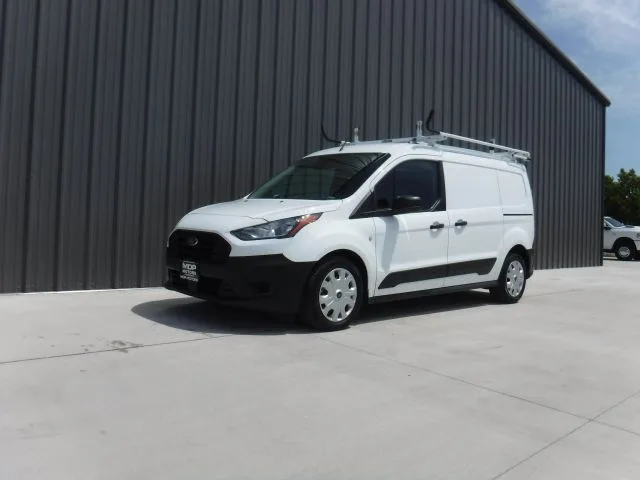
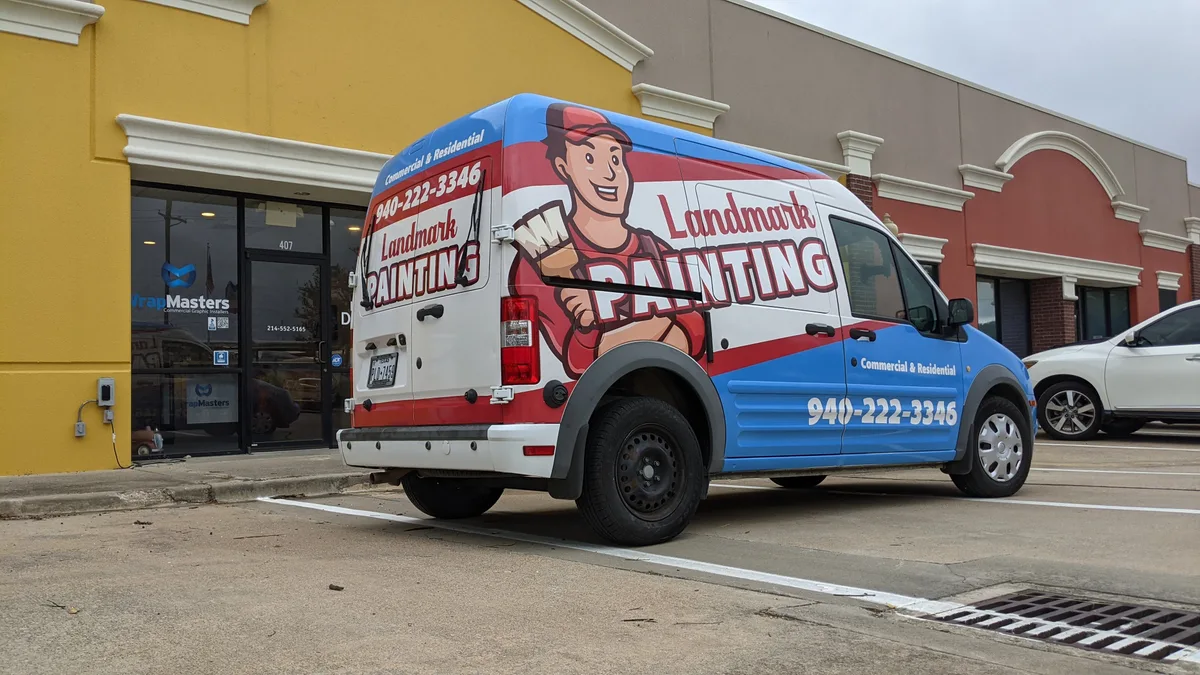
The same project, before and after: an unmarked van has nothing to score, and a finished wrap is scored on how well every factor holds at speed.
The five scoring factors
Each factor is evaluated against observable, measurable criteria. Total weight: 100 points.
Visual hierarchy
30 pointsWhether the most important information, company name and service category, dominates the layout. A wrap with strong hierarchy immediately communicates who the company is and what they do. A wrap with weak hierarchy asks the viewer to work to find that information.
Company name and service category are the two largest elements. Company name is at least 3x the size of supporting copy. Brand promise present and subordinate to both.
Company name dominates but service category is undersized or secondary to a tagline.
Logo or tagline leads the design. Company name and service category compete with other elements.
No clear hierarchy. No service category present.
Contrast and legibility
25 pointsWhether the key text elements maintain sufficient contrast against the background across lighting conditions. Legibility collapses faster than most designers expect as distance and lighting vary.
Company name, service category, brand promise, and contact path have high contrast against background in all lighting conditions. No decorative backgrounds behind key text.
Good contrast on most panels. One or two elements at the borderline in low light or at distance.
Contrast is insufficient on one or more key elements. Busy photographic backgrounds behind critical copy.
Key elements are not legible against background at traffic distance in variable lighting.
Copy volume
20 pointsHow many text elements compete for the viewer's attention. Every additional line of copy reduces the legibility of everything else. A wrap built to the 45 MPH Test carries five elements: company name, service category, brand promise, contact path, and a service area when the name gives no local signal.
Five or fewer text elements. No service lists, generic slogans, or secondary contact information.
Six to eight text elements. Some non-essential copy present but not severely cluttering.
Nine or more text elements. Service lists, multiple slogans, certifications, or social handles competing with key information.
Severely overcrowded. Key information is not identifiable without stopping.
Font selection
15 pointsWhether the fonts used on key elements are legible at 45 MPH. Script fonts, compressed fonts, and thin-weight fonts fail at distance before other font categories.
All key elements use clean, open-letterform fonts at sufficient weight. No script or highly decorative fonts on company name, category, brand promise, or contact path.
Primary elements use legible fonts. Script or decorative fonts used for secondary elements only.
Script or compressed fonts on the company name, service category, brand promise, or contact path.
Decorative fonts on all key elements. Not legible at 50 feet.
Rear panel effectiveness
10 pointsWhether the rear panel, which a trailing driver may look at for a full stoplight cycle, carries the company name, service category, and brand promise at readable scale, plus a contact path when the name alone does not provide one.
Company name, service category, and brand promise on the rear panel, plus a contact path when the name alone does not provide one, at sufficient size for a trailing vehicle at 50 feet.
Company name present on rear panel. Service category, brand promise, or a needed contact path absent or undersized.
Logo only on rear panel. Company name absent.
Rear panel blank or decorative only.
Related resources
Common questions
- What is the Wrap Readability Score?
- The Wrap Readability Score is a 0 to 100 rating WrapMasters uses to evaluate how effectively a vehicle wrap communicates at 45 MPH. It measures five factors, visual hierarchy, contrast, copy volume, font selection, and rear panel effectiveness, weighted by their relative impact on legibility. A score of 85 or above indicates a wrap that reads well. Below 65, specific factors are limiting how well it is read and remembered.
- How is the Wrap Readability Score calculated?
- The score is the sum of five weighted factor scores: visual hierarchy (30 points), contrast and legibility (25 points), copy volume (20 points), font selection (15 points), and rear panel effectiveness (10 points). Each factor is evaluated against specific, observable criteria, not subjective design preferences. The total maximum is 100.
- Does a higher score mean more leads?
- The score measures legibility, not leads, and we do not publish a lead or call prediction for any score. How often a truck brings in work depends on the market, the miles driven, the reviews, and the website as much as on the wrap. What the score tells you is whether a passing driver can read and remember the company, which is the part of the job the wrap controls.
- Can I calculate my own Wrap Readability Score?
- Yes. The scoring criteria for each factor are detailed on this page. Evaluate each factor from the same viewing conditions as a passing driver, 100 feet for hierarchy and font, 50 feet for contrast and rear panel, and total the scores. WrapMasters also offers a free wrap audit that includes the scored evaluation and specific recommendations for improving each factor.
- What is the most common factor that lowers the Wrap Readability Score?
- Copy volume and visual hierarchy are the two most commonly failing factors. Most underperforming wraps either have too much text competing for the viewer's attention, or the design leads with a logo or tagline rather than the company name and service category. Both issues are design decisions made before the wrap went to print and typically require a redesign rather than a spot correction.
Don't be a stranger.
See where your current wrap is losing visibility. Upload a side or rear photo and get an instant 45 MPH Test visibility score. Free, no commitment.
New business or no wrap yet? Get started instead, no audit needed.