
What Makes a Fleet Wrap Effective?
Design, production, and strategy factors that determine whether a wrap generates leads and builds recognition.
An effective fleet wrap does three things. It tells a passing driver who you are and what you do in three seconds or less. It projects a level of professionalism that increases the likelihood a prospect will choose to call. And it builds cumulative recognition over time so that repeat sightings turn a stranger into someone who feels familiar with the brand.
Most fleet wraps achieve the first goal inconsistently and the second and third goals rarely. Not because the businesses investing in them do not care about quality, but because most wrap buyers evaluate designs based on appearance rather than performance.
The factors that determine whether a fleet wrap actually works fall into three categories: design, production, and brand strategy. Each one can undermine the others if it is handled poorly.
Design
Visual hierarchy that works at speed
The most important information, company name and service category, must dominate the layout and be legible to a passing driver in three seconds or less. Designs that look balanced on a monitor often fail this test because balance does not equal legibility at 45 MPH. Hierarchy has to be aggressive: the most important elements should be three to four times larger than supporting copy.
A color system that holds across conditions
Fleet wraps operate in bright Texas sun, overcast skies, and dusk. The color palette has to produce sufficient contrast under all three conditions. High-contrast combinations (white or yellow on dark backgrounds, dark type on light grounds) outperform designs that rely on subtle distinctions that collapse in variable lighting.
Minimal copy
An effective fleet wrap carries five elements or fewer: company name, service category, phone number, website, and optionally a service area or a single call to action. Every additional element competes with the information that generates calls. Service lists, slogans, certifications, social handles, and mission statements reduce the legibility of everything around them.
A rear panel that works as a standalone unit
Trailing vehicles spend more time looking at the rear of a service truck than the sides. The rear panel should function as a complete, self-contained advertisement, company name and phone number at minimum, large enough to read from 50 feet at a stop.
Production
Calibrated color output
A design file and a printed wrap can differ significantly in color if the production workflow does not include color profiling. Dark blues that look rich on screen can print as near-black. Whites can shift warm or cool depending on the substrate and laminate. Color calibration between the design file and the printer output is required for the wrap to look the way it was designed.
Material matched to the vehicle and use case
Cast vinyl conforms to compound curves and rivets better than calendered vinyl. Service vehicles that operate in high-heat environments, park outdoors, or are washed frequently require different laminate specifications than a vehicle that stays indoors. The wrong material choice results in premature edge lifting, color fade, and cracking that reduces the lifespan of the wrap and the appearance of the brand.
Surface preparation before installation
Wraps installed over contaminated, oxidized, or waxed paint fail at the edges first. Proper surface preparation, cleaning, degreasing, and in some cases paint correction, is the difference between a wrap that lasts five to seven years and one that starts peeling in the first year.
Brand strategy
Consistency across the full fleet
A fleet where each vehicle is wrapped differently does not build cumulative recognition the way a consistent fleet does. Every truck in the same livery reinforces the brand. Every truck that looks different dilutes it. Consistency does not mean identical, it means the same color system, type hierarchy, and logo treatment across every vehicle, regardless of size or type.
Alignment with the company's other touchpoints
A fleet wrap that does not match the company's website, uniform, signage, and proposal template creates friction. A prospect who sees a truck, searches the company name, and lands on a website that looks unrelated will question whether the company is professional. Brand consistency across all touchpoints is what converts a first-time sighting into a call.
A phone number the company can answer
The most actionable thing on a fleet wrap is the phone number. A wrap that drives a prospect to call a number that goes to voicemail, a full mailbox, or a slow answer loses the conversion the wrap generated. The wrap is only as effective as the first contact experience that follows it.
The factors in the field
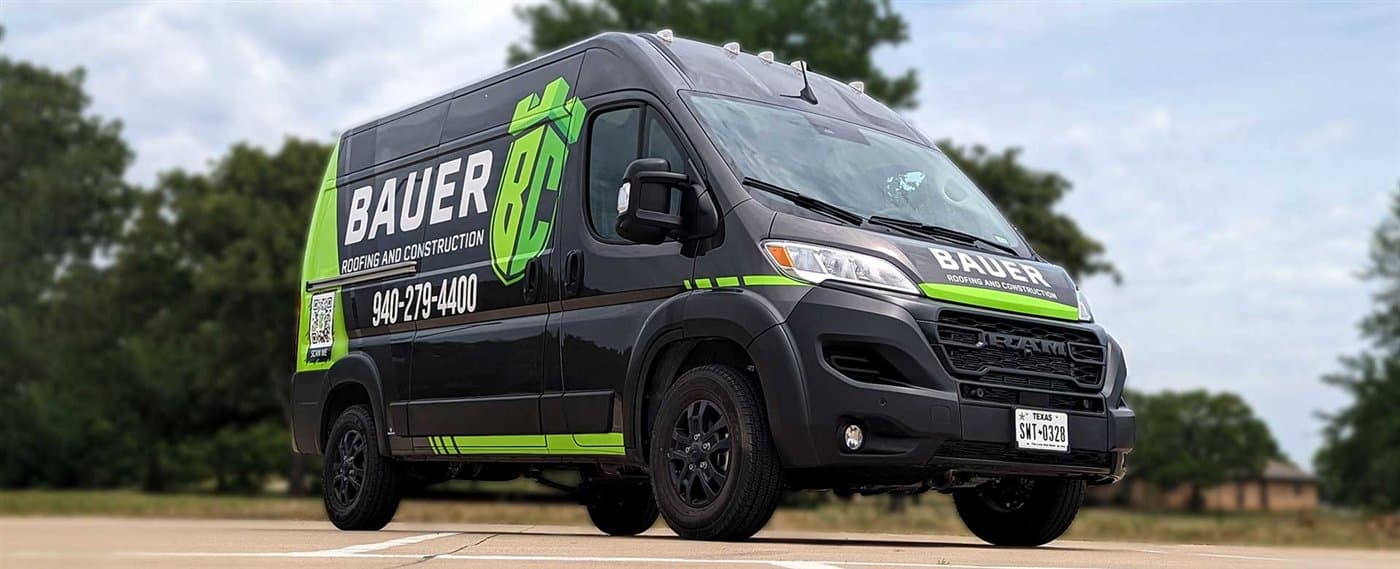
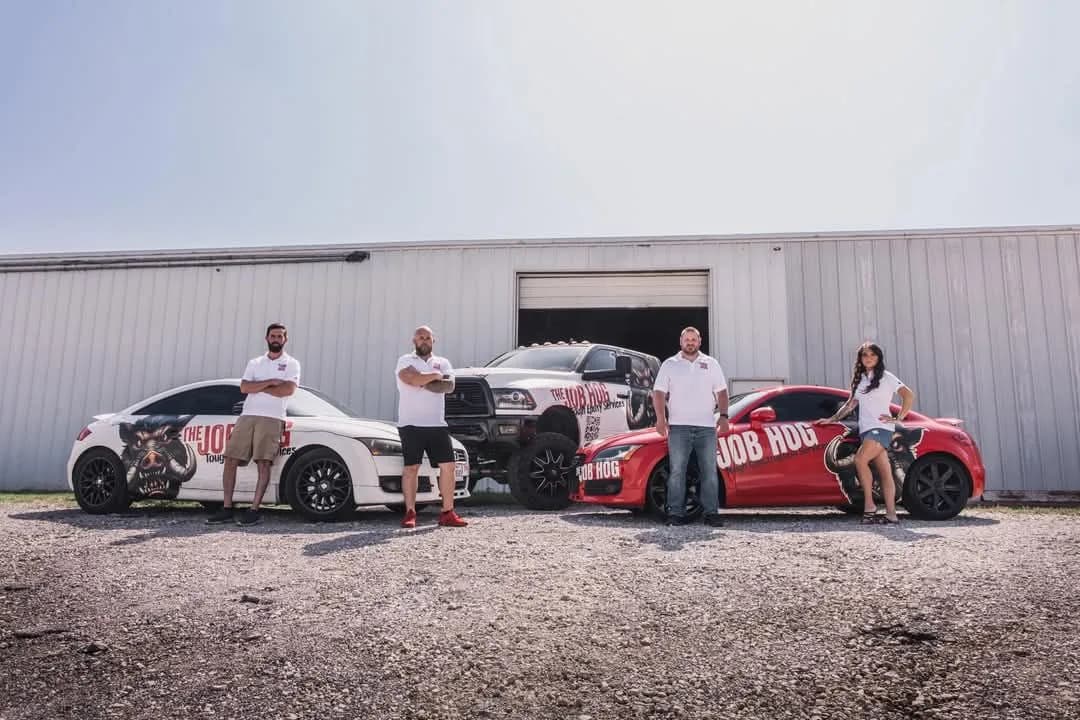
One example from each category: design hierarchy, disciplined copy, and fleet-level consistency.

How to evaluate a wrap before you buy it
Ask the wrap shop to show you proof of the design at the physical vehicle scale, not just a digital mockup. Verify that the company name is legible from 100 feet. Check that the phone number reads clearly on the rear panel. Confirm that the material specification matches your vehicle type and operating environment.
If you already have a fleet and want to know whether the current wraps are performing, the starting point is a wrap audit that evaluates the design against the 45 MPH visibility standard and the production against the material and installation checklist.
Common questions
- What is the most important element of an effective fleet wrap?
- The most important element is the visual hierarchy, specifically, that the company name and service category are immediately legible at traffic speed. A wrap can have professional photography, excellent color, and strong production quality and still fail to generate leads if a passing driver cannot identify what the company does in three seconds.
- How long does an effective fleet wrap last?
- A fleet wrap produced with cast vinyl and a quality overlaminate, installed on properly prepared paint, should last five to seven years in North Texas conditions. Calendered vinyl in high-heat or high-UV environments may last three to four years before noticeable fading or edge lifting. The actual lifespan depends on the material specification, the installation quality, and how the vehicle is maintained.
- Does the color of a fleet wrap affect how effective it is?
- Yes, in two ways. First, high-contrast color combinations improve legibility at speed. Second, a distinctive color system builds recognition over time, a fleet with a specific, consistent color is easier for a prospect to recall and search for than one that uses generic colors. Bright, unique colors are more memorable than dark, neutral palettes, though either can work if the contrast and hierarchy are correct.
- How many vehicles are needed before fleet wrap advertising becomes effective?
- A single well-designed wrap on a vehicle that drives 20,000 miles per year generates meaningful daily impressions. Fleet size amplifies that effect: two trucks in the same market generate roughly double the impressions of one. But the design quality matters more than the fleet size. One effective wrap outperforms five poorly designed ones.
- What is the difference between a fleet wrap and a partial wrap?
- A full fleet wrap covers the entire vehicle surface. A partial wrap covers a defined portion, typically the rear and sides, leaving the original paint visible on other panels. Partial wraps cost less and can be highly effective if the design is focused. The most common partial wrap failure is trying to fit the same amount of information as a full wrap onto a smaller surface.
- Should all vehicles in a fleet have the same wrap design?
- Yes, with adaptations for vehicle type. The color system, logo treatment, and type hierarchy should be identical across the fleet. The layout adapts to fit different canvases, a cargo van has different proportions than a pickup truck or a sedan, but the brand should be immediately recognizable as the same company across all vehicles.
Don't be a stranger.
See where your current wrap is losing visibility. Upload a side or rear photo and get an instant 45 MPH Test visibility score. Free, no commitment.
New business or no wrap yet? Get started instead, no audit needed.