
What Should Be on the Back of a Service Van?
The rear panel gets more reading time than every other surface on the vehicle combined. Here is what belongs on it.
Short answer
Three things always: your company name, your service category, and the brand promise you are willing to be held to. Add a phone number or city when your web address is not simply your business name. Most rear panels fail from clutter, not from missing information.
Why the rear panel is the highest-value surface on the vehicle
The sides of a service van are seen in passing, at speed, for a moment. The rear panel is different: it is read by a driver stopped directly behind the vehicle at a light or sitting in traffic. That viewer is not catching a glimpse. They are looking at your vehicle with nothing else to do, sometimes for a minute or more.
That is why the 45 MPH Test inspects the rear panel as its own layout rather than a leftover surface. It is the one place on the vehicle where a phone number gets enough dwell time to be recorded, and the place where a cluttered design wastes the most opportunity.

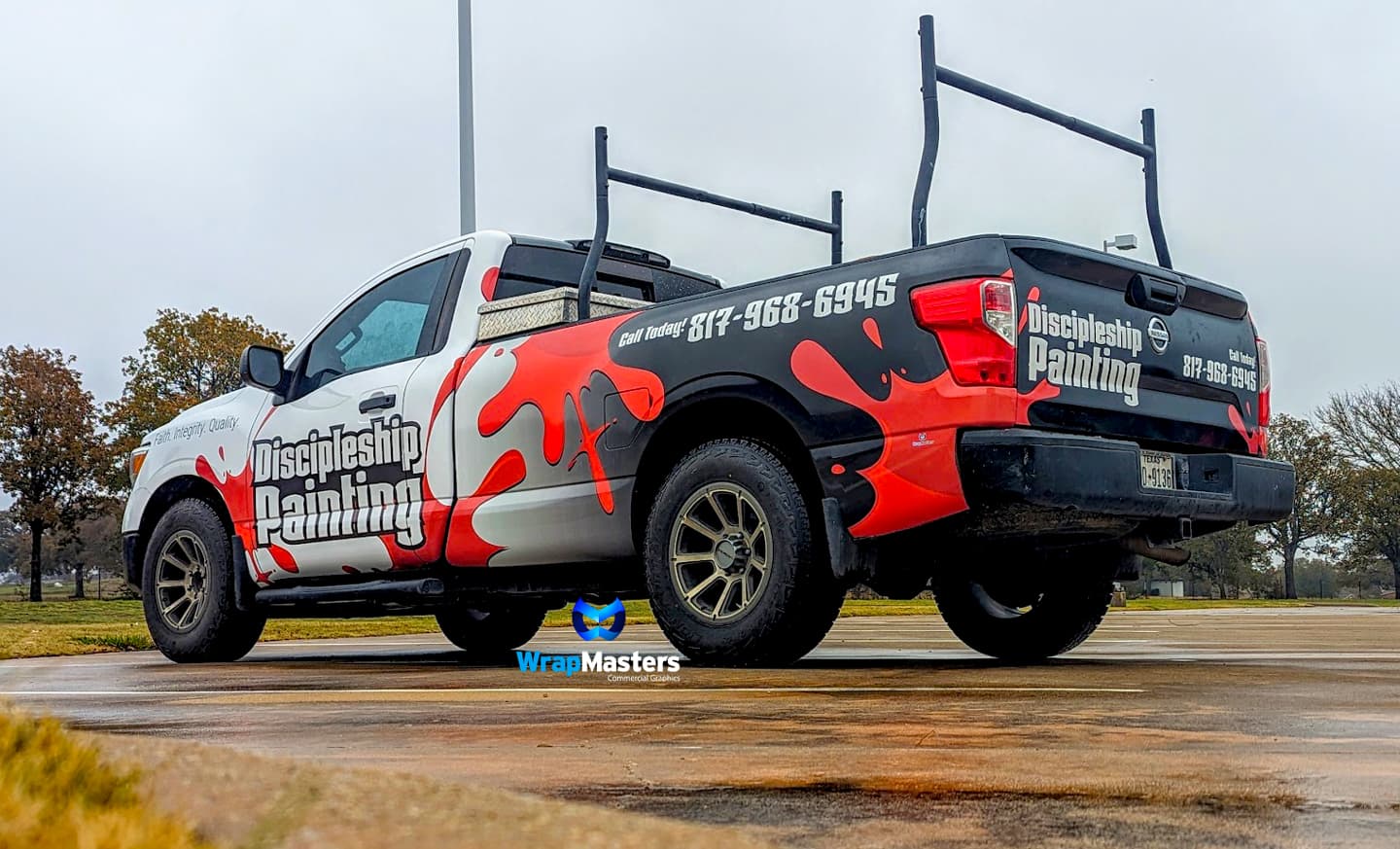
The four essentials
Company name
The single most legible element on the rear panel. A trailing driver who remembers nothing else should remember who the van belonged to. If the name is displayed as a logo mark that is hard to read, pair it with the name set in plain type.
Service category
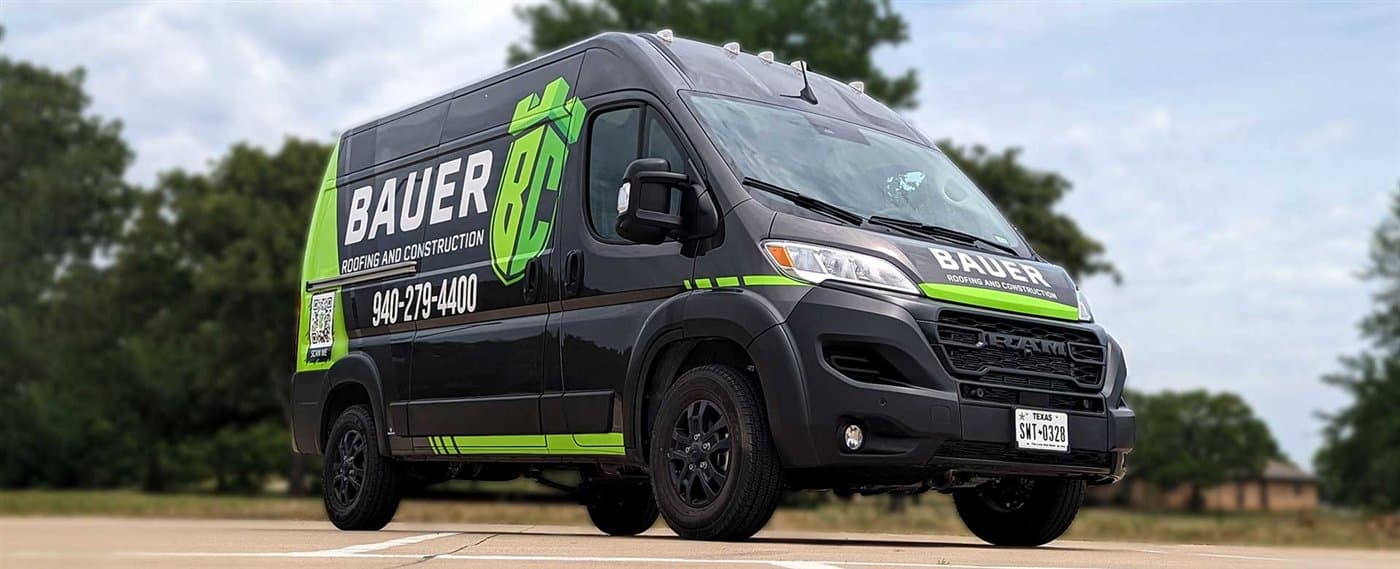
One or two words that name the trade: HVAC, Plumbing, Roofing, Pest Control. The rear panel is not the place to explain everything you do. It is the place to make sure the driver behind you knows what kind of company just drove past their exit.
Your brand promise
A short, specific promise gives customers something to hold you accountable to: No Stress, No Surprises. Call Bauer. That is the difference between a wrap that names a company and a wrap that makes a commitment. The test is specificity: if failing the line would not embarrass you, it is not a promise yet, it is filler.
A contact path, when the name needs help
If your web address is simply your business name, the name itself is the contact path: anyone who can read the van can find the website. In that case the phone number and city play a supporting role, and a number on the back never counts against the wrap. If your name and domain do not match, or your customers call rather than search, give the phone number real size. The rear panel is where it gets the most reading time.
What to leave off
Every element added to the rear panel competes with the four that matter. These are the most common additions that cost more than they contribute.
The full list of services
A bullet list of eight services reads as texture, not information. Nobody finishes reading it at a stoplight, and it competes with the four elements that matter. The full list belongs on your website.
Social media icons
Nobody follows a plumbing company on social media from behind the wheel. Icons add clutter and communicate nothing a passing viewer can act on.
Generic filler taglines
Quality You Can Trust. Satisfaction Guaranteed. #1 in Service. Lines like these are not brand promises, because no customer can hold you to them and no competitor is excluded by them. A promise earns its place on the vehicle by being specific. Filler earns nothing.
Multiple phone numbers and addresses
One contact path, set large, beats three contact paths set small. If the viewer has options to compare, the three seconds are already gone.
Wondering how many services belong on the rest of the vehicle? That question has its own answer: How many services should you list on a truck wrap?
Common questions
- What should be on the back of a service van?
- Three things always: the company name, the service category (HVAC, Plumbing, Roofing), and a specific brand promise customers can hold the company to. Add a phone number or city when the web address is not simply the business name; when the name and domain match, the name itself is the contact path. Most rear panels fail from clutter, not from missing information.
- Should a tagline or slogan be on the back of a service van?
- Yes, if it is a real brand promise: a line specific enough that customers can hold you accountable to it, like No Stress, No Surprises. A promise like that separates you from competitors whose wraps all read the same. What does not belong is generic filler like Quality You Can Trust or #1 in Service, which promises nothing, excludes no competitor, and spends space the real promise should have.
- Should I put a QR code on the back of my van?
- It can work, because the rear panel is the one surface where a viewer is genuinely stopped and able to scan. Treat it as optional and secondary: it supplements the phone number, never replaces it, and it should sit low in the layout where it does not compete with the name and category. If you use one, point it at a page worth landing on and check that it still scans after installation.
- Should services be listed on the rear doors?
- Keep it to the single category that names your trade, or at most two or three words if you genuinely operate multiple lines. A long service list on the rear doors is one of the most common wrap failures we see: it turns the highest-dwell-time surface on the vehicle into a wall of small text that nobody finishes reading.
- How big should the phone number be on the back of a van?
- If you include it, make it count: large enough to read comfortably from a car length behind the vehicle, which in practice means bigger than most companies are comfortable approving on a proof. On a full-size van we treat 4 inches as a working minimum, and the rear panel is where the number should be at its largest. How much the phone number matters depends on your name: when the business name and web address match, the name carries the contact load and the number plays support.
- Does the back of the van need the website address?
- If your web address is simply your business name, not necessarily: the company name does double duty, because anyone who can read the van can find the site. A separate URL earns its place when the domain differs from the name, and if that mismatch exists, it is usually worth fixing at the brand level rather than solving on a rear door. A long domain set small is clutter either way.
- Why does the rear panel matter more than the sides?
- Dwell time. The sides of a moving vehicle are seen for a moment in passing traffic. The rear panel is read by a driver stopped directly behind the vehicle at lights, in queues, and in traffic, sometimes for a minute or more. It is the only surface on the vehicle where the viewer has time to read, process, and record a contact path. That is why the 45 MPH Test inspects the rear panel as its own layout.
Don't be a stranger.
See where your current wrap is losing visibility. Upload a side or rear photo and get an instant 45 MPH Test visibility score. Free, no commitment.
New business or no wrap yet? Get started instead, no audit needed.