
Partial Wrap vs Full Wrap for a Service Fleet
More vinyl is not more brand. A focused partial can carry a fleet, and often reads cleaner than full coverage.
Short answer
A well-designed partial wrap can brand a service fleet as well as a full wrap, and it often reads cleaner. Coverage is a budget decision, not a branding result. What builds recognition is whether a passing driver can read who you are, and a partial that uses the factory paint as open space makes that easier, not harder.
Coverage is not recognition
A common assumption is that a full wrap is always the better brand move. It sounds right: more color, more surface, more impact. But a passing driver does not measure square footage. They get about three seconds, and in that time they either read your name and trade or they do not.
Full coverage often works against that. The extra surface gets filled with background graphics, photos, and more services, and the name ends up competing with all of it. A partial forces the discipline a good wrap needs anyway: fewer elements, a clear hierarchy, and open space around the name. That is the same standard the 45 MPH Test holds every wrap to, whatever the coverage.
Two partials, built as brands
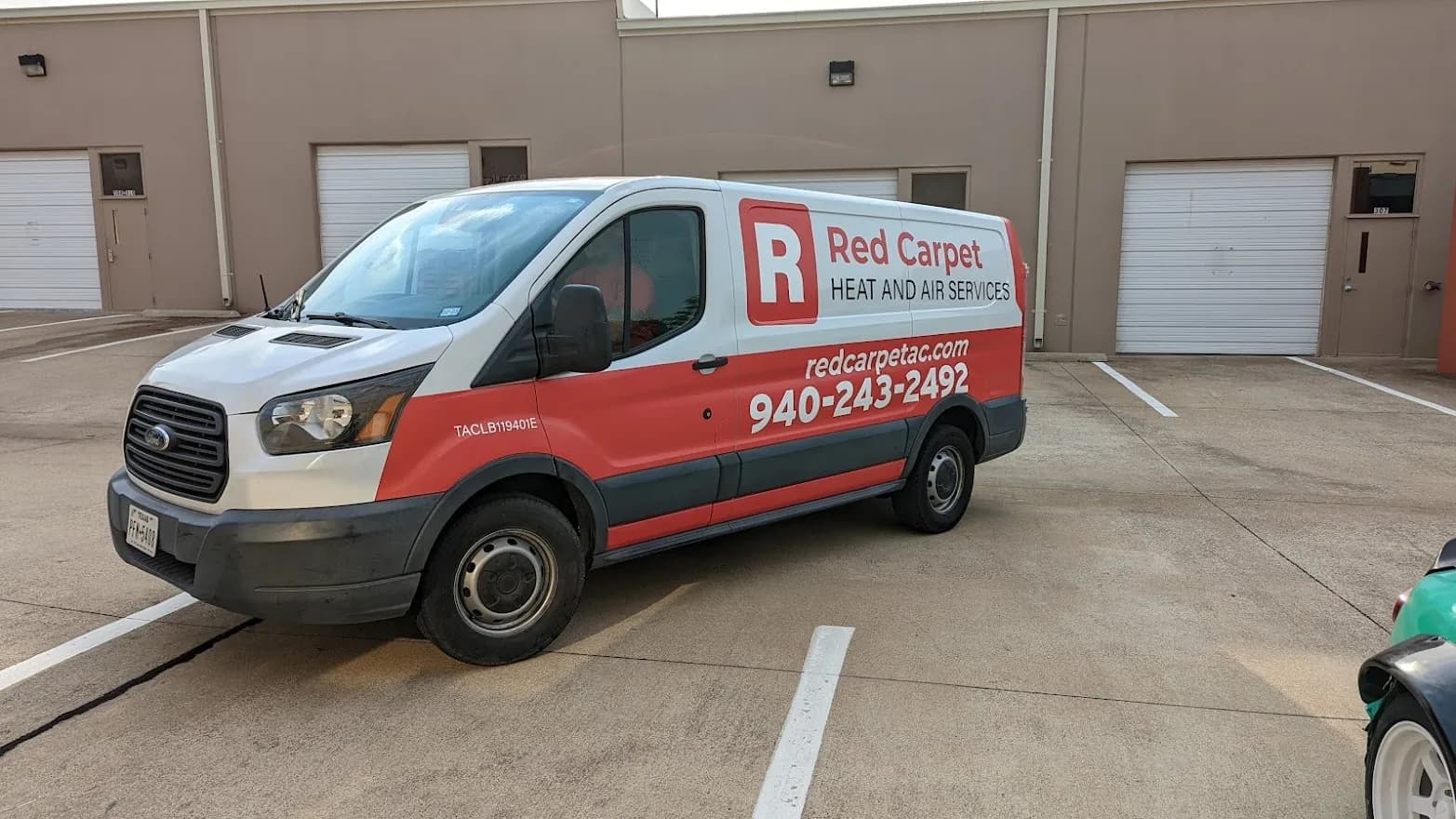
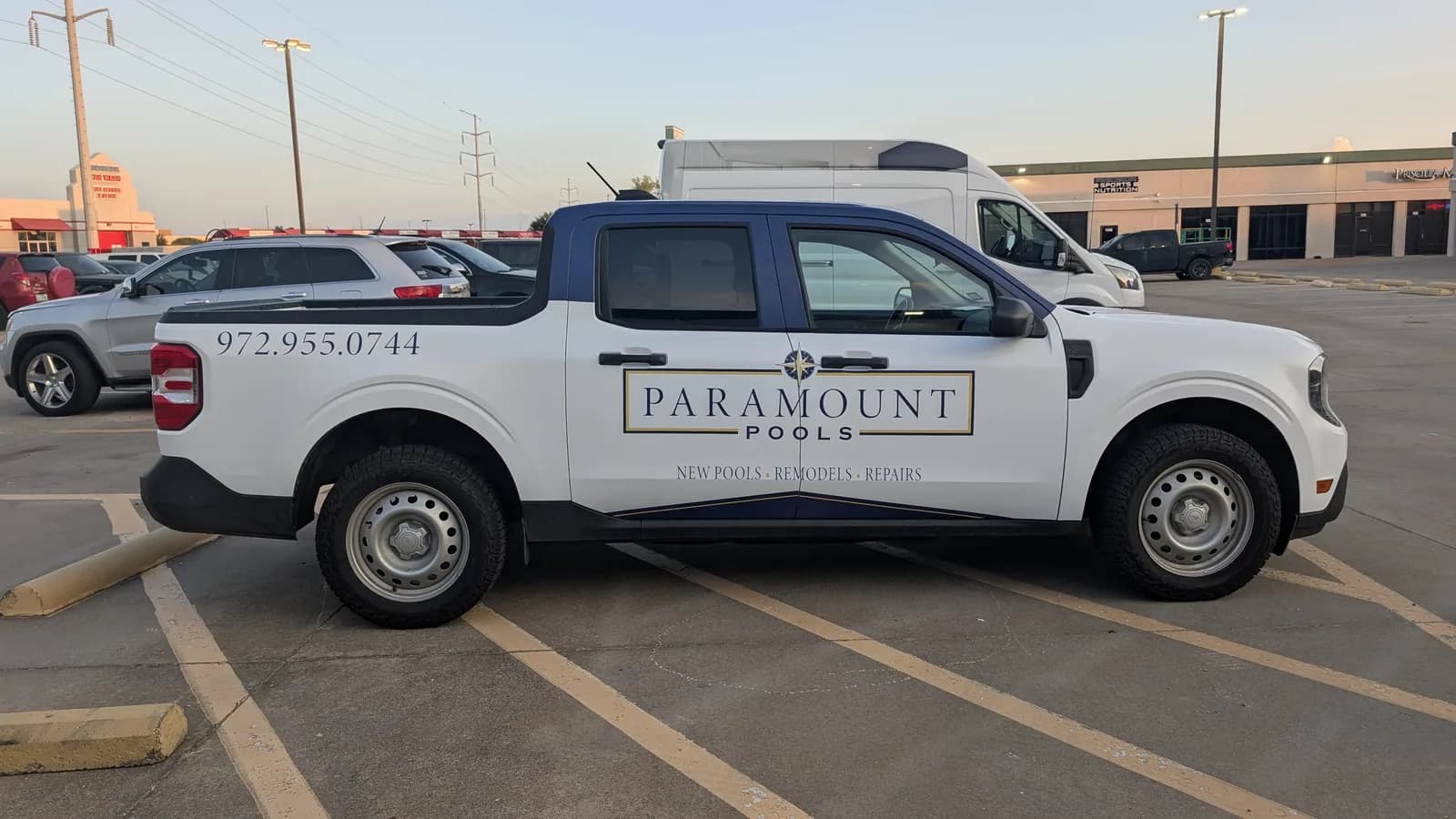
A partial can read like a full wrap from the street. Discreet Plumbing's van is matte graphics on gloss factory white, and most drivers would never guess. See the Discreet Plumbing case study.
Ironstead Fence Co. saw a full wrap and a partial for its F-350 flatbed and chose the partial. The hood logo came off because the truck sits too tall for anyone to see it, and every square foot went to the doors, where drivers actually read. See the Ironstead case study.
When a partial is the stronger choice
The factory paint is in good shape
Most service vehicles leave the dealer white. A partial treats that white as part of the design: open space that makes the name and trade stand out instead of competing with a full-coverage background.
You want the brand on more trucks
Partials start at $1,500. A full wrap on a full-size pickup runs $4,050 to $5,150. The same budget can put one consistent brand on more of the fleet, and recognition builds with every vehicle that carries it.
The fleet is growing
A partial layout is quicker to apply to the next truck, so new vehicles join the fleet on brand instead of driving plain for months.
When a full wrap makes sense
The paint is faded, damaged, or the wrong color
A partial leaves paint showing. If that paint works against the brand, or looks tired, a full wrap covers it.
The brand color is the vehicle color
When the identity depends on a dark or saturated body color that the factory does not offer, the wrap has to supply it.
What makes a partial work
- Fewer elements than a full wrap, not the same content squeezed into less space. Name, trade, one promise, a contact path.
- Edges that follow the vehicle's body lines, so the graphic looks designed for that truck, not cut off.
- The paint counted as a color in the design, not treated as empty space to fill.
- A matte finish, which stands apart from the gloss factory paint around it and hides scratches and small dents.
- The same layout on every vehicle, so a partial fleet still reads as one company.
Prices for both, by vehicle, are on the pricing page.
Common questions
- Is a partial wrap as good as a full wrap?
- For branding a service fleet, often yes, and sometimes better. What builds recognition is whether a passing driver can read the company name, the trade, and a contact path in about three seconds. A focused partial that uses the factory paint as open space can read faster than a full wrap with a busy background. How much of the vehicle is covered matters less than what the covered part says.
- Does a partial wrap look cheap?
- Not when it is designed for the vehicle. A partial looks cheap when it is a full-wrap layout cut short, or a few decals placed without a plan. One that follows the body lines, uses the paint as part of the design, and carries the same layout across the fleet looks deliberate.
- How much does a partial wrap cost?
- Partial wraps at WrapMasters start at $1,500, with print and installation included, and are priced by coverage area. For comparison, a full wrap on a full-size pickup runs $4,050 to $5,150 and a full-size van $5,050 to $9,400. Design is quoted separately as the BrandBlueprint ($3,750).
- Which panels does a partial wrap cover?
- Usually the sides and the rear, because those are what passing and trailing drivers read. On a pickup that often means the doors, the bed sides, and the tailgate. On a van, the cargo sides and rear doors. The exact coverage follows the vehicle's body lines.
- Does the 45 MPH Test apply to partial wraps?
- Yes. A partial wrap is held to the same readability standard as a full wrap. The smaller canvas means fewer elements and a tighter hierarchy. The most common partial wrap failure is trying to fit everything a full wrap would carry into half the space.
- Can I start with a partial and go full later?
- Yes. When the layout is designed as a system, a partial and a full version can carry the same name placement, colors, and hierarchy, so trucks wrapped either way still read as the same company.
Don't be a stranger.
See where your current wrap is losing visibility. Upload a side or rear photo and get an instant 45 MPH Test visibility score. Free, no commitment.
New business or no wrap yet? Get started instead, no audit needed.