
Should Your Wrapped Truck Be the Hero Image on Your Website?
Chris Graham · November 17, 2026
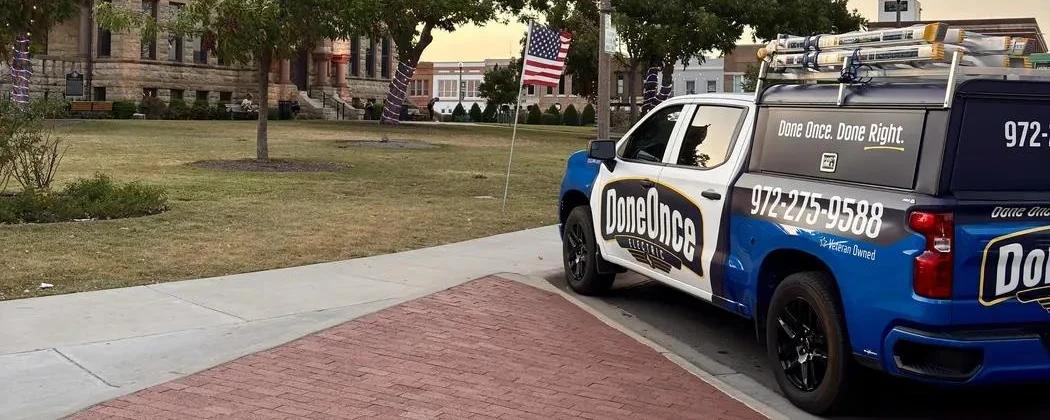
Short answer: yes, for most home service companies with a professional wrap. But not the way most websites do it. A parked side shot of a truck dropped behind a headline usually breaks on a phone and says less than the owner thinks it does.
Here is when your truck belongs in the hero section, when it doesn't, and how to shoot it so it does its job.
Why the first screen matters more than you think
Your name gets around. Your trucks are on the road every day, parked in driveways, sitting outside jobs in the same neighborhoods your next customers live in.
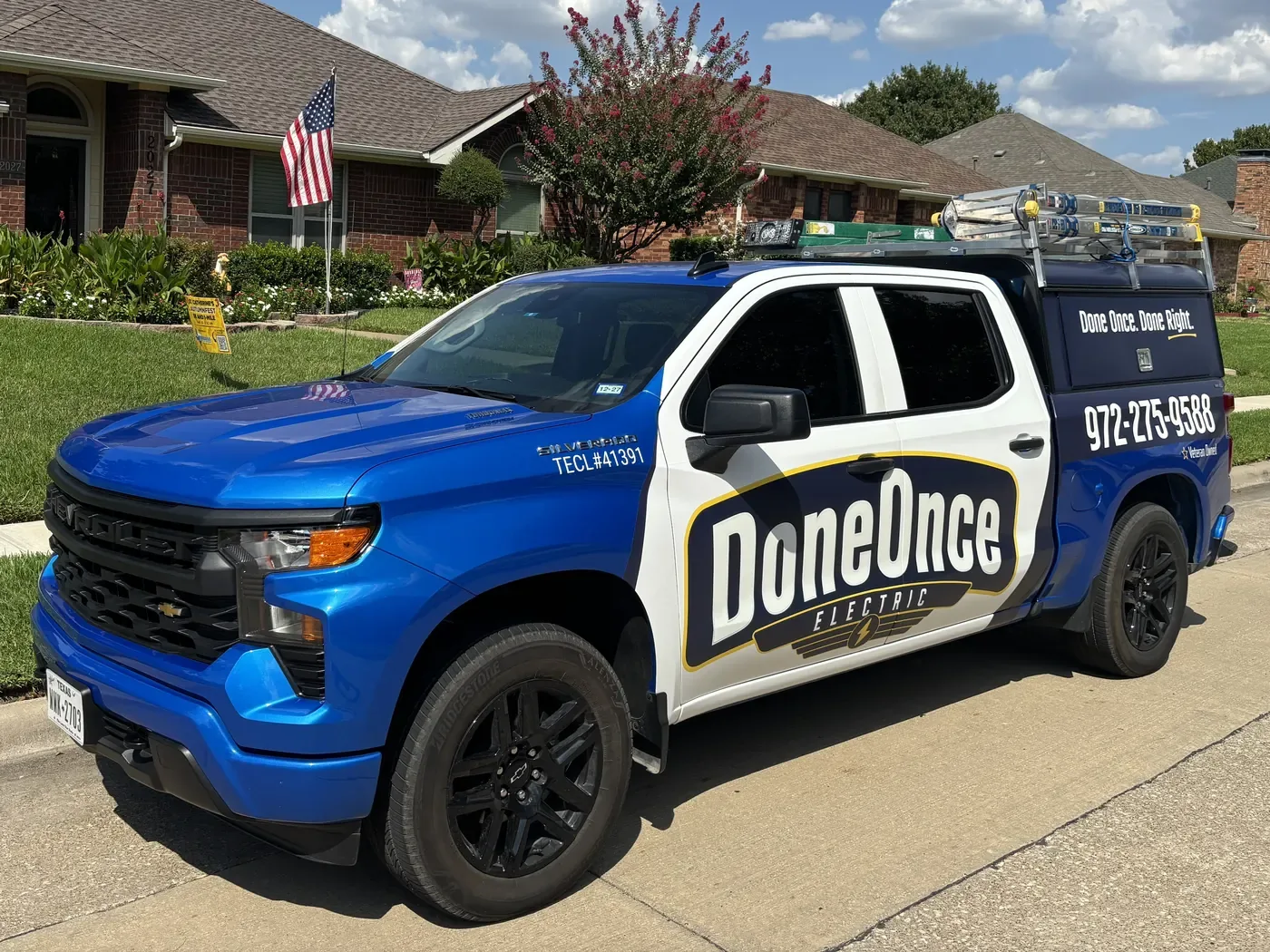
DoneOnce Electric, a veteran-owned electrical contractor, outside a home in its service area. Your truck gets seen where your customers live.
But when the need hits, a homeowner does one of two things. They search your name, or they search "near me" and pick from businesses they don't recognize. Nobody calls a stranger.
The homeowner who searches your name lands on your website with a memory of something they saw. The first screen has one job: confirm they found the company they meant. If what they see doesn't match what they remember, you just became one more option on a page full of strangers.
Why the truck belongs there
It matches the memory. The truck is the thing most people actually saw. Putting it on the first screen tells the visitor, in under a second, that they are in the right place.
It shows the business is real. A professionally branded truck tells a homeowner this company has invested in itself. That matters to someone deciding who to let into their house.
It is yours. A photo of your own truck beats any stock image of a smiling technician who doesn't work for you. Homeowners can tell the difference.
It keeps the brand consistent. In Fleet-First Branding, the website is built to match what the truck establishes. The hero section is the most visible place that match either holds or breaks.
Where it goes wrong
The mobile crop. A truck seen from the side is a long, wide shape. Most of your visitors are on phones, and a phone screen is tall. A wide truck photo cropped to a phone screen can end up as a door panel and half a logo. If the photo can't survive a vertical crop, it is the wrong photo.
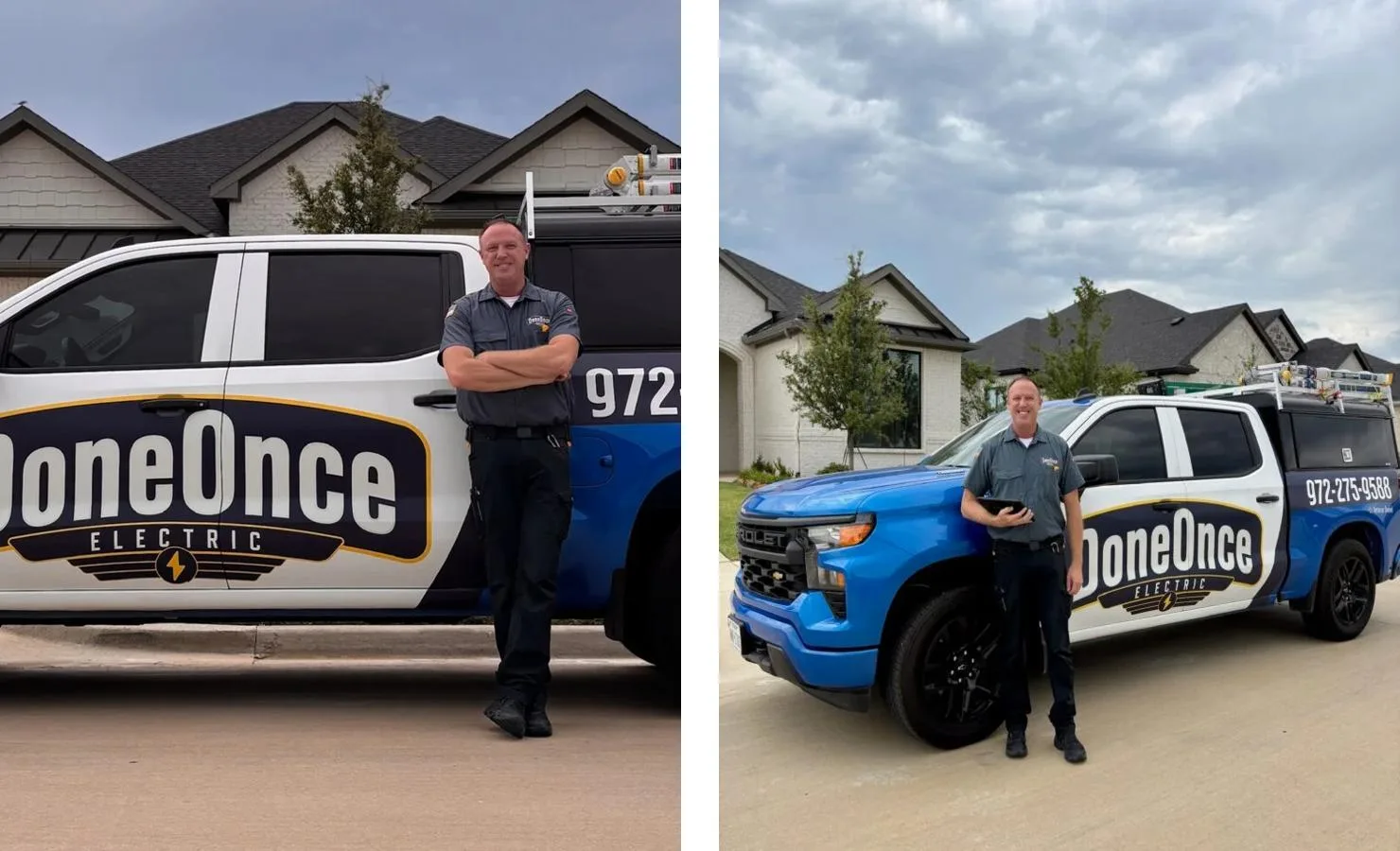
Same DoneOnce Electric truck, same phone-shaped crop. Left: the side profile loses the first letter of the name and the phone number. Right: the front three-quarter angle keeps the whole truck, the name, and the person.
The headline fights the graphics. Your wrap is already a message: name, service, colors, layout. Lay headline text on top of it and you have two messages competing for the same space. One of them has to give way.
The truck is not the service. Homeowners are buying a fixed leak, a clean yard, or a new roof, not a vehicle. A hero that is only a parked truck says "we have a nice truck." It doesn't say "we solve your problem."
An outdated wrap gets the spotlight. If the wrap is faded, dated, or doesn't match the logo and colors on the website, the hero section puts that mismatch in front of every visitor. Fix the brand before you feature it.
What a strong hero photo looks like
Use this checklist when you shoot or choose the photo:
- Use your real truck with its current wrap, washed.
- Shoot from the front three-quarter angle (the front corner of the truck), not a straight side profile. This angle shows the front and side together and holds up better when the photo is cropped for phones.
- Park it at a real job, in front of a customer's home in your service area, not in your shop lot.
- Put the owner or a technician in the frame, in uniform, next to the truck.
- Shoot in soft light: overcast days, early morning, or late afternoon. Avoid harsh midday sun and hard shadows. A matte finish photographs without the glare spots gloss picks up.
- Leave open space on one side of the frame (sky, driveway, lawn) where the headline can sit without covering the wrap.
- Before it goes live, look at the page on your phone. If the name on the truck is cut off or unreadable, reshoot or recrop.
The DoneOnce Electric photo on the right in the comparison above checks every box: front three-quarter angle, a real neighborhood, a technician in uniform beside the truck, and open sky above for a headline.
One photo like this shows recognition, a real person, and the service happening in a neighborhood that looks like the visitor's own.
What the headline still has to do
The photo confirms who you are. It cannot tell the visitor what you do, where you do it, or how to reach you. The headline and button have to carry that:
- Say the service and the service area plainly (for example, "Plumbing repair in Denton County").
- Give one clear next step: a call button or a booking button.
- Place the text beside the photo or over a darkened area of it, not on top of the wrap graphics.
When not to use your truck
- You don't have a professional wrap yet.
- Your wrap is old, damaged, or doesn't match your current logo and colors.
- Your strongest photo is clearly your crew or a finished job, and the truck would be a weaker second choice.
In those cases, use the stronger photo now and put the truck in the hero once the brand is ready.
A two-minute test for your current hero section
Cover the headline with your hand. Would someone who saw your truck on the road know they found the right company?
Now cover the photo. Does the headline say what you do and where you do it?
If both answers are yes, your hero section is doing its job. If either one is no, that is the first fix on your website.
Where are you still a stranger?
The hero section only works if the truck is worth showing. The free Wrap Audit scores your vehicle against the 45 MPH Test, the published standard we hold our own work to, and shows you where your brand is getting lost between the road and your website.
Photos courtesy of DoneOnce Electric.
Frequently asked questions
- Should a home service company put its truck in the website hero section?
- For most home service companies with a professional wrap, yes. People who saw the truck and then searched the company name should see that same truck first, so they know they found the right company. Use a front three-quarter photo at a real job with a person in frame, and keep the headline off the wrap graphics.
- What angle works best for a truck photo on a website?
- The front three-quarter angle, from the front corner of the vehicle. It shows the front and the side together, which makes the truck easier to recognize and holds up better than a flat side profile when the photo is cropped for a phone screen.
- When should I not use my truck as the hero image?
- When you don't have a professional wrap yet, when the wrap is old or doesn't match your current logo and colors, or when a crew or finished-job photo is clearly stronger. Use the stronger photo now and feature the truck once the brand is ready.