
What Is Fleet-First Branding™?
Chris Graham · August 16, 2026
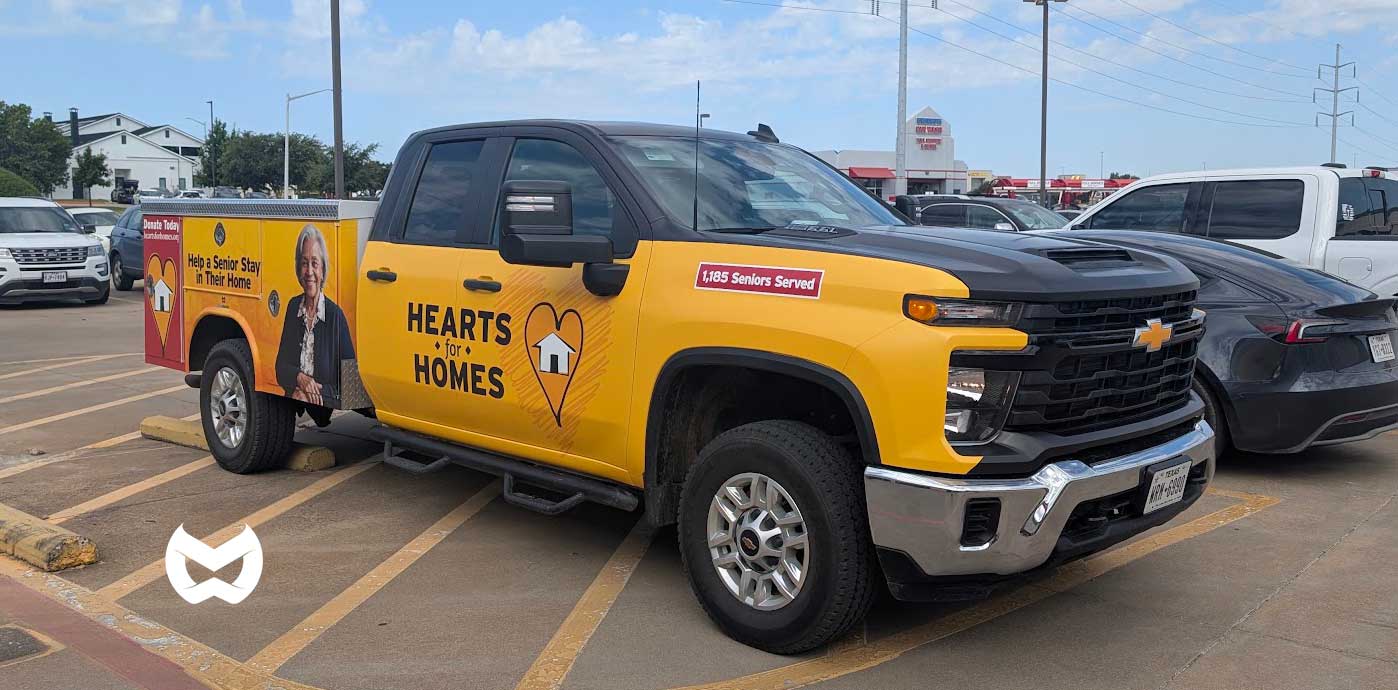
There is a gap in how most home-service brands are built.
The brand gets designed on a screen. The logo looks clean. The colors are considered. The website is polished. Then the design gets handed to a wrap shop, and something gets lost in the translation. The vehicle comes out of the bay looking like a different company than the one on the website. The phone number is too small to catch from a passing car. The service category is buried, and the brand promise is too long to read at 45 miles per hour.
The wrap isn't the problem. The process is.
Most branding systems are built from the screen out. They design for approval and then adapt to the vehicle at the end. Fleet-First Branding™ works differently: the brand is decided first, for every channel at once, and the fleet is treated as a deliberate priority instead of an afterthought.
A different starting point
We want to be clear: traditional branding isn't broken. Plenty of companies have built strong brands using conventional processes. The standard works.
We just believe there's a better place to start, especially for home-service companies.
For a residential HVAC company, a plumbing contractor, a pest control business, or a landscaping operation, the fleet is not a marketing afterthought. It is the part of the brand the market sees again and again. Those vehicles are on the road every day, in every neighborhood the company serves, for years at a time. Few other channels show up that often, in that many places, for that long.
If the brand isn't built to work on the vehicle, the fleet becomes background noise. The company is visible, but it isn't recognized. And there is a significant difference between being seen and being known.
Fleet-First Branding™ starts with the BrandBlueprint, which sets one direction for the whole brand. The truck, the website, the Google profile, the reviews, social and the building each carry that direction while doing their own job. The fleet gets deliberate priority inside it, because it is seen again and again in the market, and it is one of the hardest places for a brand to read clearly.
That is not a claim that the old model fails. It is a different starting point. One that decides the brand before anything is designed, and then checks the vehicle against the street, not just the screen.
The founding belief: clarity is the foundation of recognition
Recognition does not happen all at once. It builds over time. The same company, the same colors, the same name, appearing again and again in the same market until customers start to register it without thinking.
But repetition alone is not enough. If what gets repeated is unclear, inconsistency compounds. The fleet sends one message. The website sends another. The yard signs say something else. And none of it adds up to a recognizable brand.
Fleet-First Branding™ is built on a simple premise: clarity is the foundation of recognition.
If the brand is unclear, the fleet gets cluttered. If the message is unclear, the website wanders. If the identity is unclear, marketing becomes inconsistent. Get the brand clear first. Then make it consistent. Then let recognition build.
That is the chain: Clarity → Consistency → Recognition.
It sounds straightforward. In practice, it requires a process that most branding engagements skip.
The five stages
Fleet-First Branding™ is the category WrapMasters defined, and the work runs in five stages. Each stage builds on the one before it. The process does not start at design.
Stage 01: Discover
Before anything is designed, we need to understand what makes the business different, who the customers are, what the competitive landscape looks like in the field, and whether the company already has brand equity worth preserving.
Most wrap projects skip this stage entirely. They go straight to color and layout. Fleet-First doesn't, because the brand decisions made in the next stage have to be grounded in something real. Discovery is where we find the strategic foundation the rest of the work stands on.
This stage covers: market position, service category clarity, how the company is currently perceived versus how it wants to be known, and what existing materials are working or costing recognition.
Stage 02: Distinguish
This is the BrandBlueprint. It is where the brand is decided, before anything is designed, and it sets the direction and guardrails for every channel.
Positioning. The brand promise. Voice. Approved and never-say language. The messages for key customer moments. How the brand shows up at each touchpoint, from the truck to the website to the Google profile.
These decisions are made once and applied consistently from that point forward, so the brand stays coherent whether a customer first meets the company on a truck in traffic, in a search, through a referral, or on a review site. Recognition is built on hearing and seeing the same brand again and again.
Stage 03: Stress-Test
This is the stage that most branding processes skip, and the one that catches the most problems.
The vehicle is designed inside the BrandBlueprint's direction, with the fleet's recurring presence as a deliberate priority. Then it is evaluated against the 45 MPH Test before anything is printed. We test the design against the conditions it will actually face in the field: brief viewing windows, distance, vehicles in motion, competing visual clutter, and the realities of mixed-fleet production. A design that reads clearly on a cargo van has to read clearly on a pickup, on a box truck, and on a trailer without looking like three different companies.
This stage catches production problems, readability failures, and hierarchy errors before anything is printed. It is far less expensive to fix a design in review than to reprint a fleet.
Stage 04: Deploy
The brand goes onto the fleet, website, listings, facilities, materials, and wherever else customers encounter the business. Each channel does its own job inside the same guardrails. One team handles the transition. There is no handoff between the brand strategist, the designer, the print shop, and the web developer, because they are all the same team operating from the same brand direction.
Fleet graphics are printed in-house on 3M premium vinyl with HP Latex inks and installed in our climate-controlled Denton facility. A standard cargo van installation is complete in one business day and backed by a 2-year limited warranty on workmanship and adhesion.
Stage 05: Reinforce
Recognition is built by being seen again and again over time. Reinforce is the ongoing work that keeps every channel consistent and building recognition.
For BrandBlueprint clients who choose it, that ongoing work is Fleet-First Marketing, an organic program that keeps the brand consistent in the places customers check: reputation, local search, the website, and social content. It works from the same brand direction, so every touchpoint keeps pointing the same way over time. It is a choice, not an automatic next step.
One team, no handoffs
This only works if every stage operates from the same brand direction. That is why WrapMasters handles all three disciplines in-house.
Brand Strategy establishes the direction: who the company is, what it stands for in the market, and what the consistent visual and verbal identity should be.
Fleet Graphics executes that direction on the vehicle. Design, printing, and installation are all handled in our Denton facility. The brand direction established in strategy is the same standard the wrap layout is built to.
Fleet-First Marketing, for BrandBlueprint clients who choose it, carries that direction across the other customer touchpoints: website, reviews, local search presence, and social content. The marketing team is not adapting a brand they received from somewhere else. They are extending a brand they built from the beginning.
The alternative is the patchwork model most service companies know too well: a wrap shop that doesn't know the strategy, a web developer that doesn't know the brand, a social media vendor that doesn't know the market. Each vendor does their job, and the brand never comes together.
Fleet-First Branding™ replaces that stack with one accountable team that executes the whole system.
Who it is built for
Fleet-First Branding™ was developed specifically for home-service companies whose fleets are seen again and again in the markets they serve. That includes most residential service trades: HVAC, plumbing, electrical, roofing, pest control, landscaping, painting, cleaning, pool and spa, garage door, and general contracting, among others.
Fleet-First Branding™ applies at any fleet size. A one-truck startup and a 20-vehicle operation face the same core challenge: build a brand that customers can recognize, remember, and recommend. The starting point is the same in both cases.
For companies that already have wraps and branding, the process does not require starting over. The BrandBlueprint is the entry point for any wrap we design. It keeps the equity worth keeping, decides what is costing recognition, and sets the direction the next vehicle is designed inside.
For companies in the DFW metro and North Texas, fleet graphics are available as part of a complete Fleet-First engagement. Brand strategy and marketing work can be handled remotely for select clients outside the service area.
What Fleet-First Branding™ is not
It is not a claim that every home-service brand needs to be rebuilt from scratch. Many companies have strong existing equity in their name, colors, or logo that is worth preserving and extending, not replacing.
It is not a promise that a recognizable brand will automatically generate leads or revenue. Brand recognition builds familiarity and credibility over time. It removes friction from a buying decision. What it does not do is replace a quality service, competitive pricing, or a sales process.
It is not a generic marketing retainer. Fleet-First Branding™ is a specific category with a defined process, and it is designed for a specific kind of business. Not every company is the right fit.
Where to start
The entry point for most companies is the free Wrap Audit: upload a side or rear photo of your vehicle and get your 45 MPH Test score in minutes. The score shows how the vehicle reads at distance, where the layout is costing recognition, and where to start.
From there, we tell you exactly where Fleet-First Branding™ would change the outcome, and what it would take to get there. There is no obligation to proceed.
The audit is free, takes about a minute, and is available at wrapmasters.com.
WrapMasters is the Denton, Texas company behind Fleet-First Branding™, building service trade brands across North Texas. Fleet-First Branding™ is the category WrapMasters defined, and its vehicle inspection standard, the 45 MPH Test, is published in full.