
Your Truck Earned the Search. Is Your Website Losing the Call?
Chris Graham · November 12, 2026
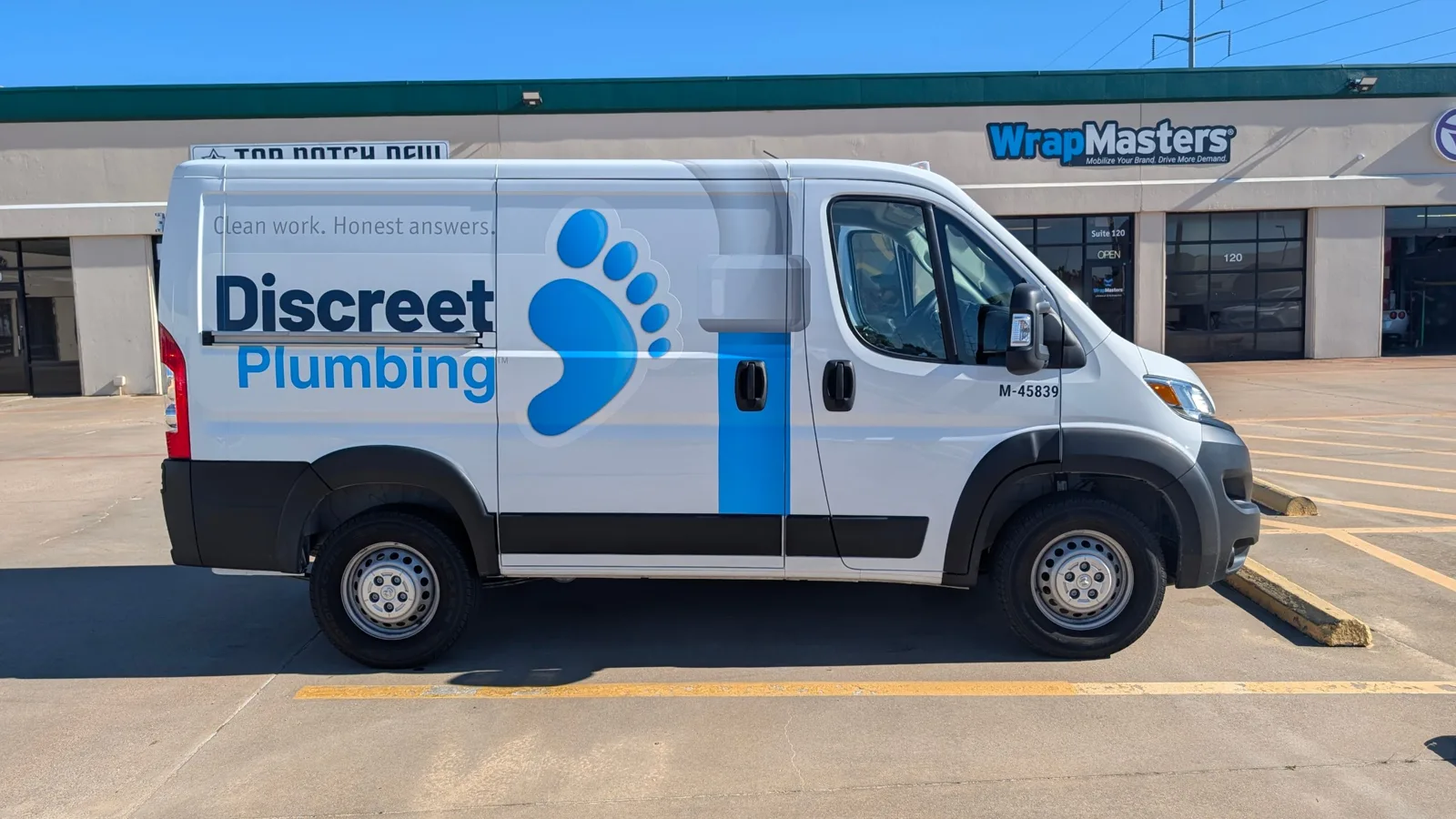
3 fixes you can make in 15 minutes, so the people who search your name find the company they saw and call.
Your truck is doing its job. People see it, remember your name, and search it when something breaks. Then they land on a website that looks nothing like the truck, and they go back and pick a stranger. You never find out it happened.
The short version
- People who see your truck search your name later. Your website is what they find.
- Most trade websites lose that visitor because nothing on the screen matches the truck.
- Fix 1: put a real photo of your wrapped truck at the top of the page.
- Fix 2: make the headline the exact words from the truck.
- Fix 3: make the phone number a one-tap call button at the top.
- All three take about 15 minutes on most website builders, if you can log in to your own site and have the photo ready.
- When you are ready for more, one page built from the same brand as the truck is enough. Keeping it current is the Fleet-First Marketing stage.
The search you never see
A homeowner passes your truck on Tuesday. Nothing is broken at her house, so she does nothing. Three weeks later the water heater quits, and she remembers a name.
She types that name into her phone. This is the moment the truck was built for, and you will never know it happened. What she finds in the next ten seconds decides whether she calls you or backs out and searches "near me," where every company is a stranger.
Nobody calls a stranger. The truck made you familiar. The website has to prove she found the same company.
Why most trade websites lose her
Most trades have a website. Most of those websites were built the same way: pick a template, drop in the logo, fill the rest with stock photos and a paragraph that starts with "Welcome."
The result looks like a website and fails at its one job. Here is what she actually sees:
- A stock photo of a smiling stranger with a wrench. It could be any company in any state. Nothing on the screen matches the truck she remembers.
- Different colors, a different logo, a different promise. The truck said one thing and the site says another, so she wonders if she has the right company.
- Five menu items and no obvious next step. She came to call. The phone number is at the bottom of a Contact page.
- Template leftovers. Placeholder text, a sample address, an empty testimonial box. Small things that say nobody is looking after this.
None of these are technology problems. They are brand problems. The site was built as a separate project, by someone who never looked at the truck.
Fix 1: Put your truck at the top of the page
The first thing on your website should be a real photograph of your wrapped truck.
It is the one image on the internet that only your company can show. More important, it is the image she already has in her head. When the page opens and the same truck is sitting there, she knows she is in the right place before she reads a word. Recognition does the work that a paragraph of copy cannot.
Three rules for that photo:
- Real, not rendered. Use a photograph of the actual vehicle, not the design proof. A proof shows a plan. A photo shows a company that exists.
- The side people see on the road. Show the view that carries your name, the same view she passed in traffic.
- Somewhere local, if you can. A driveway or a street in your service area says more about where you work than a list of zip codes.
This works even before the site is finished. The Super Van, a home improvement and repair company, has a coming-soon page up right now. It shows the van, the name, the line from the van ("Your Home. Handled."), and a phone number. That is one screen, and it already answers the question she came with.
One honest condition: this only works if the truck is doing its job. If the wrap is hard to read at speed, putting it at the top of the website repeats the problem in a second place. The website cannot be clearer than the brand it is built from.
How to do it: take the photo with your phone in daylight, side view, with the whole vehicle in the frame. Log in to your website and replace the main image on the home page. About five minutes.
Fix 2: Use the truck's words as the headline
Put a photo of your truck next to your website. Read the largest words on each. If they are different, change the website to match the truck.
The Discreet Plumbing van says "Clean work. Honest answers." A homeowner who remembers that line should see it again the moment the page opens. If the site says "Quality Plumbing Solutions" instead, she has no way to know it is the same company.
How to do it: edit the main headline on your home page. Type the line from the truck, word for word. About five minutes.
If your truck has no line worth repeating, that is worth knowing too. It means the truck is carrying a logo and not a promise.
Fix 3: Make the call one tap
She searched your name because she is ready to call. Do not make her hunt for the number.
Put the phone number at the top of the page as a button. On a phone, tapping it should start the call. Then make it the only action on the page. Every extra button is a reason to wait.
How to do it: add a button at the top of your home page and set its link to your phone number (most website builders have a "phone" or "call" link type). Then open the site on your own phone and tap it. About five minutes.
One note on the 15 minutes: it assumes you can log in to your own website and already have the truck photo. If you cannot, getting that login is the first fix.
When you are ready for more: the one-page site
The three fixes repair the first screen. The full version is one page, and one page is enough for the person who searched your name. She is not researching. She is confirming. Give her seven things, in this order, and nothing else.
| # | Section | What goes there | The question it answers |
|---|---|---|---|
| 1 | The truck | A real photo of your wrapped vehicle, your name, what you do, and one button to call | Is this the company I saw? |
| 2 | The promise | The exact line from the truck, word for word, with two or three sentences that back it up | What do they stand for? |
| 3 | Services | A short list in the words a homeowner uses, not trade terms | Do they fix my problem? |
| 4 | Service area | The towns you actually serve, by name | Do they come to me? |
| 5 | Proof | Real reviews with real names, and photos of your own jobs | Can I trust them in my house? |
| 6 | The people | A photo of the owner or the crew, and a few plain sentences about who shows up | Who is coming to my door? |
| 7 | The call | The phone number as a tap-to-call button, and a short form for people who would rather write | How do I reach them right now? |
A few details that matter more than they look:
- Use the same words as the truck. Fix 2 applies to every section, not only the headline. A reworded promise reads as a different company.
- Use the same colors and the same logo. Not close. The same.
- Make the web address match the name on the truck. If she remembers the name, she can find you without a phone number.
- Keep one action. Every section ends with the same button. Call.
- Build it for a phone first. That is where this search happens. The call button should be reachable with a thumb from anywhere on the page.
- Match your Google Business Profile. Same name, same phone, same hours. If the listing and the site disagree, she has to guess which one is right.
What to leave off
A one-page site gets stronger with every item you remove.
- Stock photos of people who do not work for you
- Sliding banners that change before anyone finishes reading
- A "Welcome to our website" paragraph
- A wall of badges and association logos above the first review
- Pop-ups, chat bubbles, and anything else that covers the call button
- Anything left over from the template
The test for each item is the same one we use on a truck: does it help someone recognize you, remember you, or reach you? If not, it comes off.
Where this fits in Fleet-First Branding™
Fleet-First Branding builds a home service brand from the truck out. The BrandBlueprint decides what the company needs to say. The first vehicle puts those decisions on the road, where they have a few seconds to work. The website is the next application of the same guide. It is not a copy of the truck layout. It is the same company, the same promise, and the same look, doing a different job.
That is why the one-page site is short work when the brand is settled, and hard work when it is not. Every decision on the page (the headline, the colors, the promise, the order of the services) was already made for the truck.
Be clear about what one page will not do. It serves the person who searches your name. It will not put you in front of every "near me" search for every service in every town. That takes ongoing work: keeping the site, the Google listing, and the reviews current and consistent with the fleet, and adding to them over time.
That ongoing work is Fleet-First Marketing, a later stage of Fleet-First Branding for companies that are ready for it. Fleet-First Marketing runs as your marketing department, from the team that built your brand. It is not the first step, and it is not right for every company. The one-page site comes first, because there is nothing to maintain until the page that matches the truck exists.
Start with the truck
If your truck already carries a brand you are proud of, the test is simple. Search your own company name on your phone and open your site. Does the first screen show the company from the truck? Can you call in one tap?
If you are not sure the truck is doing its job, start there. The free Wrap Audit scores your vehicle against the 45 MPH Test and shows what a driver actually reads. The website follows the truck, so the truck comes first.
Nobody calls a stranger. Make sure the company they find is the one they saw. Take the free Wrap Audit.