
Most People Who See Your Trucks Today Don't Need You Today
Chris Graham · August 15, 2026 · Updated September 4, 2026
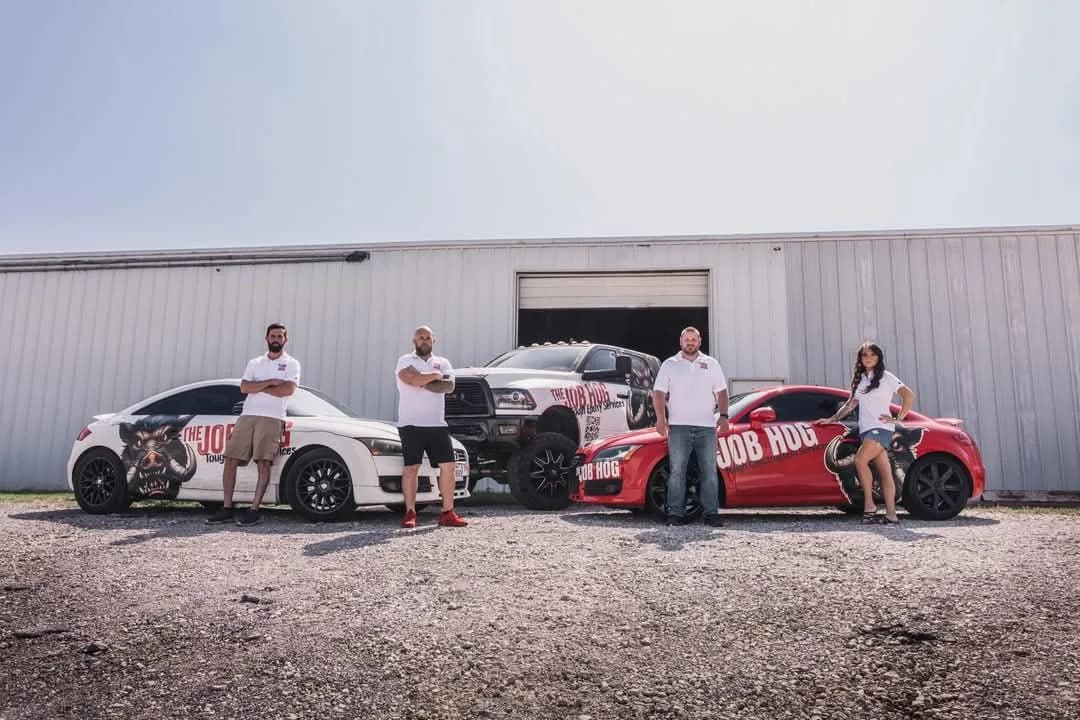
Most of the people who see your trucks today don't need you today.
I think home service companies underestimate how important that is.
The homeowner sitting next to one of your vans at a red light probably doesn't need a plumber right now. The person walking past a truck parked three houses down may not need an HVAC company. Someone driving behind one of your electricians may have no reason to call an electrician this week.
If we judge every marketing impression by whether the phone rings immediately afterward, all of that exposure can look pretty worthless.
I don't see it that way.
Those people may not need you today.
But eventually, some of them will.
And when that day comes, one of the biggest questions is whether your company feels completely unknown or whether something in their head says:
I've seen these guys before.
That's awareness marketing to me.
Not impressions.
Not reach.
Recognition.
The Buying Decision Usually Starts Before the Problem
A homeowner doesn't wake up every morning thinking about which plumbing company they should hire.
They aren't researching HVAC contractors every weekend just in case the air conditioner quits six months from now.
Most home service demand appears when something happens.
The water heater starts leaking.
The house isn't cooling.
The garage door won't open.
A breaker keeps tripping.
Water starts coming through the ceiling.
Now they need somebody.
And they usually need somebody fairly quickly.
At that point, the company has a much easier job if the homeowner has already encountered the name before.
Maybe they've seen the trucks.
Maybe one has been parked in the neighborhood several times.
Maybe somebody at work mentioned the company.
Maybe they've seen the name in Google.
Maybe the company has shown up online enough times that it feels familiar.
None of those exposures had to produce a lead when they happened.
Their value may show up later.
Together, they create familiarity.
And familiarity matters because most homeowners cannot really judge the technical quality of a home service company before hiring them.
They are evaluating confidence.
Does this company look established?
Do I recognize them?
Do they look organized?
Do other people trust them?
Do I understand what they do?
Do they feel like a legitimate company I can let into my home?
The more of those questions you answer before the customer calls, the less uncertainty they have to work through afterward.
I've Seen What Happens When Recognition Changes
The Job Hog is one of the clearest examples I've seen firsthand.
We rebranded the company. Over the following two years, The Job Hog's owner-reported revenue grew from roughly $800,000 to $1.49 million, then $3.7 million.
I'm careful about how I say that.
I'm not going to tell you changing the brand caused that growth.
It didn't.
You don't grow a company like that by putting graphics on trucks.
Operations still have to work. Sales matter. Customer service matters. Reviews matter. The people matter. Execution matters.
But I also wouldn't dismiss what happened when the company became substantially easier to recognize.
The rebrand changed how The Job Hog showed up in its market.
The trucks became recognizable.
The identity became consistent.
The company became easier to remember.
Every additional vehicle put the same recognizable business back in front of the market.
That matters.
A truck driving around town is not only advertising to the person who needs the service right now.
It is building recognition with people who may need that service months from now.
As the fleet grows, those exposures begin stacking on top of each other.
Somebody sees a truck on Monday.
Then another one a few weeks later.
Then The Job Hog is at a neighbor's house.
Then somebody mentions the company.
Then eventually they need the service themselves.
By that point, the name isn't new.
Recognition has already done some of the work.
Being Seen Isn't the Same as Being Recognized
I've wrapped enough vehicles to know there is a big difference between a truck getting attention and a company building recognition.
A truck can be loud and still fail.
It can have huge graphics.
A clever slogan.
A long service list.
Multiple phone numbers.
A QR code.
A website.
A mascot.
Certifications.
Social media icons.
And everything else somebody thought they should fit onto the vehicle.
That doesn't necessarily make the company easier to remember.
Sometimes it does the opposite.
At 45 MPH, people are not reading your truck like a brochure.
They have a few seconds.
That's why we look at vehicle visibility through what I call the 3-second / 45-MPH test.
Can somebody quickly understand:
Who are you?
What do you do?
Do you look professional?
Is there something recognizable enough that they could remember you later?
If the customer has to study the truck to figure it out, the vehicle isn't doing its job very well.
That's not a design preference.
It's a communication problem.
And it directly affects awareness.
Because if somebody sees your truck ten times but never clearly processes the company name, those ten exposures do not have nearly the value they should.
A Fleet Should Work Like One Recognition System
If you have ten trucks, I don't think you should look at them as ten separate designs.
You have one recognition system operating through ten vehicles.
That is a different way to think about a fleet.
The same company name.
The same visual hierarchy.
The same recognizable identity.
The same basic communication pattern.
Again and again.
That's how recognition compounds.
If every truck looks different because they were wrapped at different times, different ideas were tried, or somebody wanted the newest vehicle to be more creative, you're giving up part of that repetition.
The customer has to process the business again instead of simply recognizing it.
I've seen fleets where every vehicle is technically branded, but the fleet doesn't really behave like a brand.
One van is white.
Another is black.
The logo is in a different position.
One carries a service list.
One carries a slogan.
Another uses an older version of the logo.
Each truck might look fine by itself.
But that's not the real test.
The better question is:
Does seeing one vehicle make it easier to recognize the next one?
If it does, the fleet is building something.
That's What I Call Visibility Equity
One impression normally doesn't create strong recognition.
Repeated impressions do.
A homeowner sees the truck.
Later they see another one.
Then one is parked at a neighbor's house.
Then they hear the company name from a friend.
Then the company appears in a search result.
Each exposure reinforces the one before it.
Over time, the business stops feeling unfamiliar.
That recognition has value.
I call it visibility equity.
It is the familiarity and recognition a business builds by consistently showing up in the places customers already live, drive, search, ask questions, and make decisions.
It doesn't disappear because an advertising campaign ended.
It accumulates.
But it only accumulates effectively when the business is recognizable from one exposure to the next.
That's why consistency matters more than constantly changing things in an attempt to get attention.
Every time the market has to relearn who you are, some of that accumulated recognition gets weakened.
Your Truck Isn't Working Alone
This doesn't stop with the fleet.
A homeowner may see your truck and then search the company.
Now they're looking at your Google profile.
Then your reviews.
Then your website.
Maybe your Facebook page.
Maybe they're asking ChatGPT, Gemini, or Google AI which companies in the area they should consider.
Businesses like to divide those things into channels.
Customers don't.
To them, it's all one company.
If the truck looks established but the website looks abandoned, confidence drops.
If the website is strong but nobody can clearly tell what areas you serve, confidence drops.
If the trucks look like one company and the online presence looks like another, recognition gets weaker.
Awareness becomes more valuable when each exposure confirms the previous one.
The truck creates recognition.
The Google profile confirms legitimacy.
The reviews provide evidence.
The website helps the homeowner understand the company.
The person answering the phone reinforces the same impression.
That's what I mean when I talk about a visibility system.
It isn't about putting your logo everywhere.
It is about presenting the same clear, believable company wherever the customer encounters you.
Awareness Makes Referrals More Powerful
There is another part of this that is difficult to see in a marketing report.
A homeowner tells a neighbor:
"You should call The Job Hog."
There are two very different responses.
One is:
"Who?"
The other is:
"Oh yeah. I've seen those trucks."
The referral is identical.
The starting point is not.
In the second situation, the recommendation is reinforcing recognition that already exists.
The company does not feel completely unknown.
That's why I don't separate awareness and referrals as cleanly as marketers sometimes do.
Recognition helps referrals land better.
A recommendation from somebody you trust combined with a company you've already seen creates a different level of confidence than either one by itself.
There Is Value Being Created Before the Lead Exists
This is also why awareness marketing can frustrate business owners who want every dollar tied directly to a lead.
I understand that.
If you're spending money, you should know what you're getting.
But not every valuable marketing activity creates an immediate conversion.
Some marketing captures somebody who needs you right now.
Google Ads can do that.
Search can do that.
A strong Google Business Profile can do that.
Awareness has a different job.
It influences who the customer recognizes before they start shopping.
That becomes valuable because once the buying process begins, the competition gets crowded quickly.
Google results.
Local service ads.
Directories.
Competitor websites.
Review counts.
Price comparisons.
Recommendations.
AI-generated answers.
Everybody is trying to become the choice at the exact moment the homeowner needs something.
Awareness allows a company to enter that decision with something the competitors cannot create at the last minute:
familiarity that already exists.
The Goal Isn't to Be Everywhere
I don't think a contractor needs to be on every platform.
I don't think every business needs more marketing.
And I don't think making something louder automatically makes it more effective.
The goal is simpler.
Be easier to recognize.
Be clear about what you do.
Show up consistently.
Make the company look as organized and trustworthy as the work actually is.
Give the market enough repeated exposure that the name starts becoming familiar.
Then make sure the website, reviews, search presence, sales process, and customer experience support that same impression when somebody finally looks you up.
That's awareness marketing as I see it.
You're building recognition today for a buying decision that may not happen until later.
Done correctly, that recognition becomes an asset the company keeps building.
That's visibility equity.
And that's part of what I watched happen with The Job Hog.
The rebrand wasn't valuable because the company suddenly had prettier trucks.
It was valuable because the market had a clearer company to recognize.
Once that recognition starts compounding across trucks, neighborhoods, referrals, search, reviews, and every other place customers encounter the business, you're no longer just buying attention.
You're becoming known.
For a home service company, I think that's a much more valuable objective.