
The 45 MPH Test: What Your Truck Has to Say Before Someone Passes You
Chris Graham · September 10, 2026
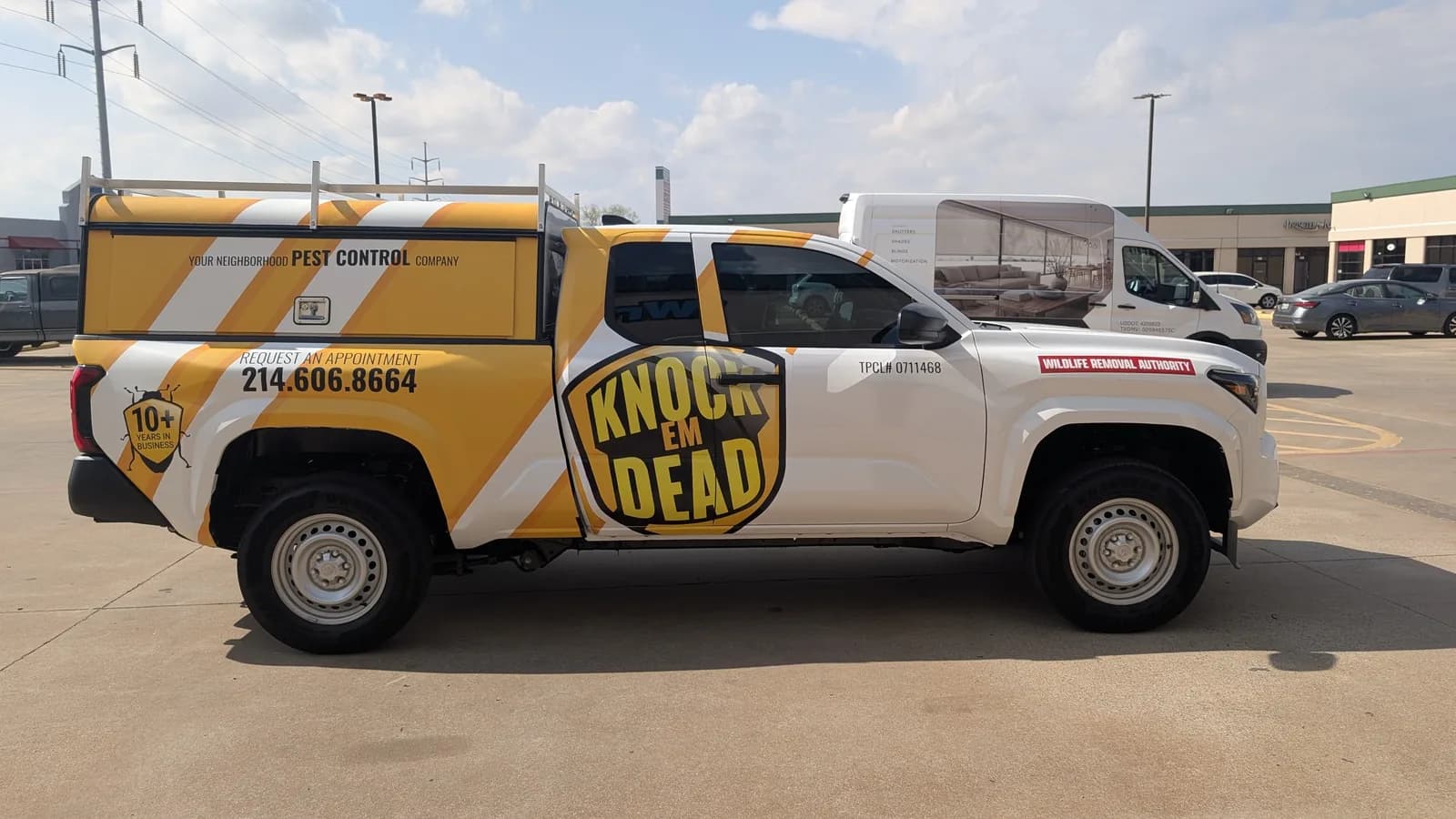
Most business owners think about their truck wrap the way they think about a business card: put the logo on it, add the phone number, done. Then they wonder why nobody calls.
Here's the problem. A business card gets read for ten seconds, up close, by someone who already wants to talk to you. A truck wrap gets read in about three seconds, from a moving car, by a stranger who has never heard of you and has zero reason to care yet. Different job, different rules.
That's why we built the 45 MPH Test: a pass/fail standard for what a wrap actually has to communicate at 45 MPH, from about 100 feet away, before the truck is gone. Every wrap we design is checked against it before it prints, our free Wrap Audit scores any truck against it, and it comes down to five elements.
1. Company Name
Sounds obvious. It isn't. The name has to read from 100 feet at 45 MPH, from both sides of the vehicle. If someone can't read your name at a glance, nothing else on the truck matters, because they have no way to look you up later. Legible beats clever every time.
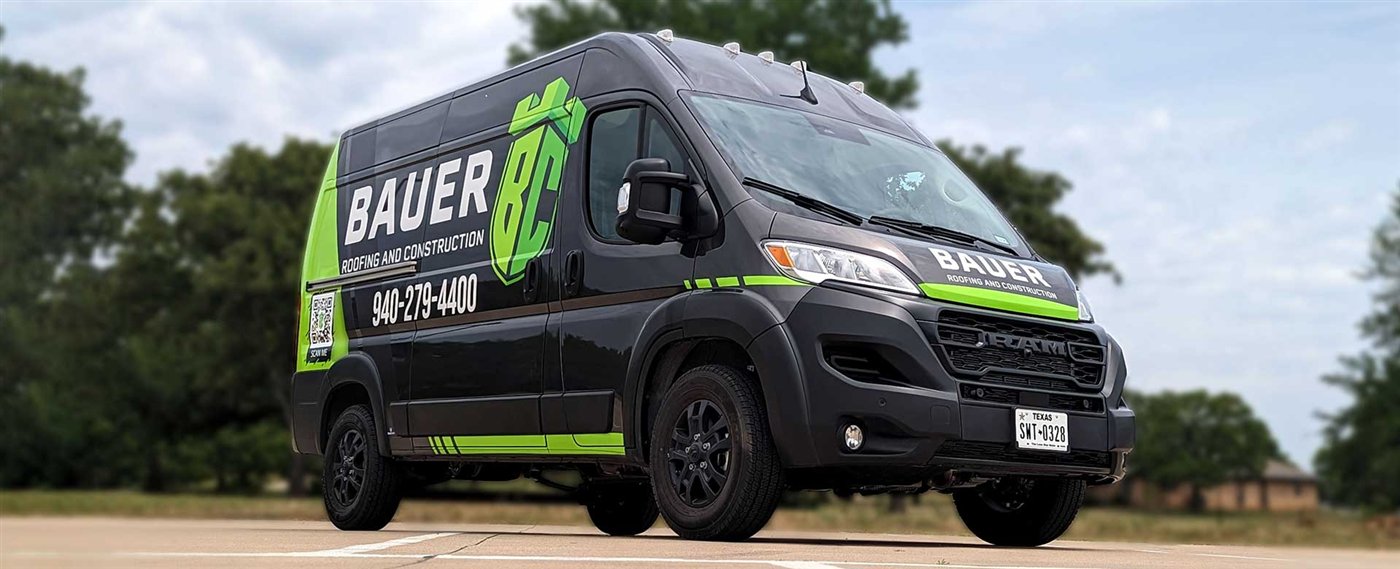
Bauer is a clean example of the name, the service category, and the contact path working together. The name is the largest thing on the vehicle, "Roofing and Construction" sits directly beneath it, and the phone number follows in the same column. You can process all three in one pass without your eyes hunting.
2. Service Category
Your name alone rarely tells a stranger what you actually do. "The Job Hog" is a great name, and on its own it does not tell you the company installs epoxy floors. The wrap has to say it plainly, in words, readable at the same 100 feet, not implied by a logo. If someone has to guess your industry, you've already lost them.
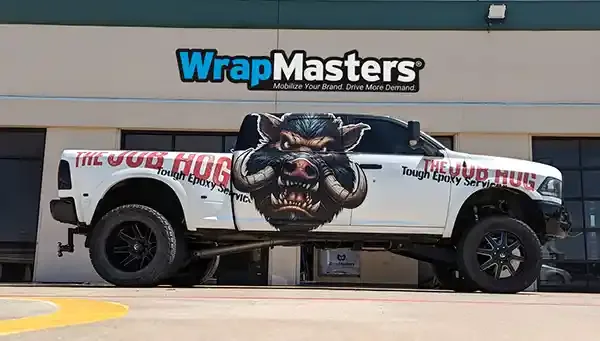
That's why "Tough Epoxy Services" runs under the name on every panel. The hog gets your attention. The three words underneath are what make the attention useful.
Watch where your eye goes in that walkaround. The hog lands first, the name second, the category third. That order is deliberate, and it's the order the test is checking for.
3. Brand Promise
This is where most wraps fail, and it's the one owners resist fixing the most.
A brand promise has to be specific, about one breath long, and legible from 50 feet. Generic filler like "Quality You Can Trust" says nothing, because every competitor's truck says some version of the same thing. A list of services isn't a promise either, it's a menu. A promise commits to how you operate, not what you sell. "No missed appointments" is a promise. "Full service HVAC" is not.
Here is what that looks like in practice, starting with a truck that has since been redesigned.
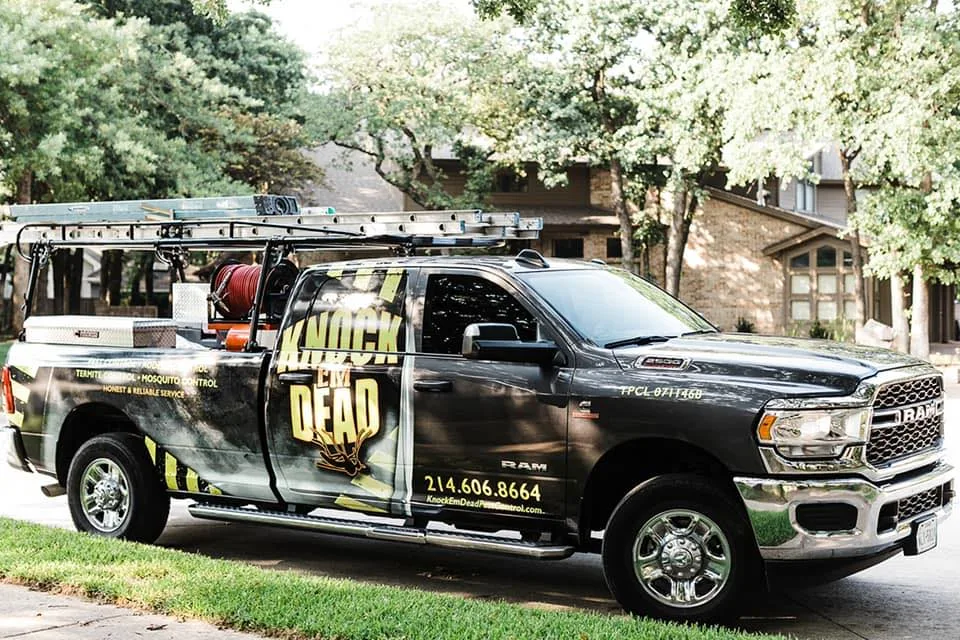
The earlier wrap carried a line, "Honest & Reliable Service," and a treatment menu, "Termite Control, Mosquito Control." Neither one commits to anything. Every pest control company in the metroplex could run those same words without changing one, which is another way of saying they do no work at all. Set the name in distressed type, half on the window and half on the door, and the three-second read is gone.
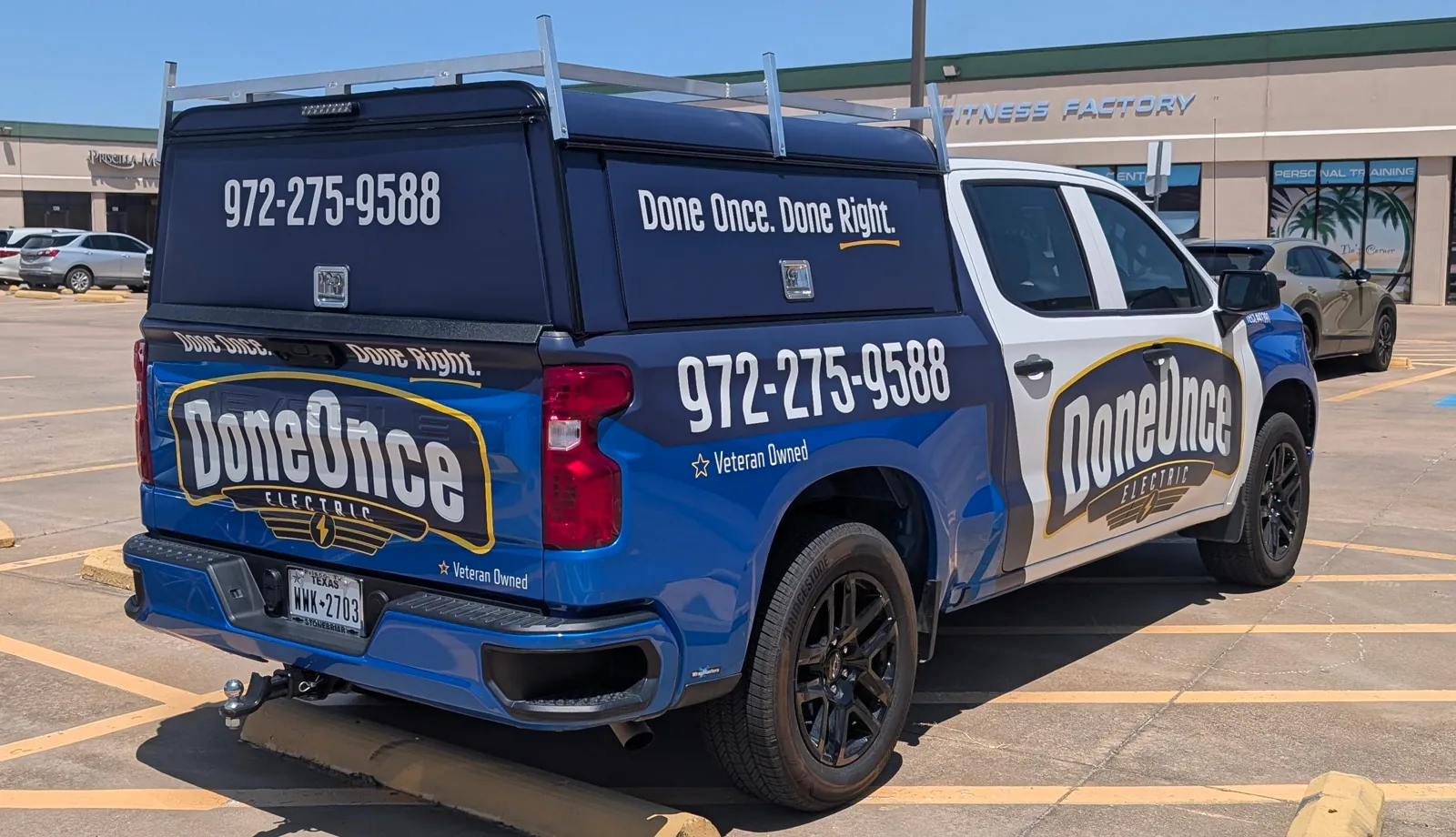
Now compare a truck that makes a promise. Done Once Electric runs "Done Once. Done Right." Four words, specific, and it commits to how the company works rather than what it sells. Notice what else is doing the work: one dominant name, the trade built into the logo, and the promise placed where it reads on the same pass rather than fighting for space.
4. Contact Path
There has to be an obvious way to reach you: a web address that matches the name, or a phone number legible from 50 feet.
If your web address is simply your business name, a clean, legible company name already satisfies this on its own, and a smaller phone number isn't a deduction in that case. The name is the contact path. But if there's no clear route to reach you at all, that's a fail.
5. Service Area
This one is a supporting element, not a dealbreaker. If your name already signals you're local, a town name or a regional reference, you don't lose points for leaving it off. It matters more for businesses whose name gives no geographic clue.
Why We Don't Use View Counts
You'll see wrap companies pitch you on "30,000 to 70,000 daily impressions." We leave that out of the standard on purpose.
A sighting nobody can read, understand, or act on isn't worth anything, no matter how big the number sounds. The 45 MPH Test isn't about how many people see your truck. It's about whether the ones who do walk away knowing who you are, what you do, what you promise, and how to reach you.
Try It On Your Own Fleet
We built a free tool that scores a photo of your truck against this exact standard. Upload a side or rear shot and get your 45 MPH Test score back in minutes, no sales call required: run the free Wrap Audit.
If you want the full standard, including the four system checks that go beyond these five elements, it's published here: the 45 MPH Test.
If your truck fails, you're not alone. Plenty do, the first time. The good news is every one of these five elements is fixable, and none of them require a bigger budget, just a clearer one.